
Parents, let me forewarn you this is a talk about the nitty gritty. You can choose whether to continue or to let your children read on. That said, I hope you WILL because this article is a necessary part of horse-care. It’s part of the job.
Today I want to discuss nitty-gritty, down-and-dirty. It’s a topic that many horse-owners shy away from discussing. Most people are too grossed out about it, or too modest.
Sheath cleaning.
It’s not pleasant, but it’s necessary (in my humble opinion).
The male horse’s genitalia have a way of collecting….grime. The sweat and natural body oils combined with dirt and dust from the environment over time will collect inside the sheath.
As with ANY topic in horses you will here several opinions:
- Horses never need their sheaths cleaned, I never clean mine and they’ve always been fine.
- Horses should be cleaned only as necessary, no more than a few times per year.
- Horses need to be cleaned regularly.
I had one lunatic yell at me once because she insisted that horses need their sheaths cleaned every other week.
I am going to show you WHY I belong to the “1-2 times per year” camp and show you briefly how I go about cleaning my boys.
Horses are usually just fine with some dirt build-up. In the wild the stallions are often mating and that tends to keep their man-bits clean enough. Our geldings only use their parts for urination so they tend to accumulate more dirt and schmegma….I know…ewww
But I DID warn you first
Sheaths that build up too much dirt and grime can become inflamed and sore. They will swell. Sometimes when a male horse is excessively itching his bum he’s in need of a sheath cleaning.
In some extreme cases a dirty sheath will even cause behavioral problems.
‘I’ve got my boy back’: sheath bean removal transforms horse’s life
On the other side of not cleaning the sheath ENOUGH is the OVER-CLEANING a sheath. The horses are pretty used to and can tolerate a good amount of icky in the nether-regions. When we begin to involve ourselves too much we can damage the sensitive skin, remove the beneficial bacteria, and cause more harm than good. When we clean too often we introduce foreign bodies, chemicals, etc that are not normally present (and not exactly welcome). Soaps, even the mild ones, can damage the skin there. our gloved hands and water can introduce foreign bacteria. A healthy horse will have a healthy immune system and does not need his sheath cleaned too often.
My rule of thumb is to check twice be year and it seems to work well for me. I check with the spring shots and I check before the cold weather hits. As a matter of fact this is too often for some of the horses I have cared for as they didn’t require a second cleaning. Between seasons I simply check for tail rubbing, bad behavior, or swollen parts.
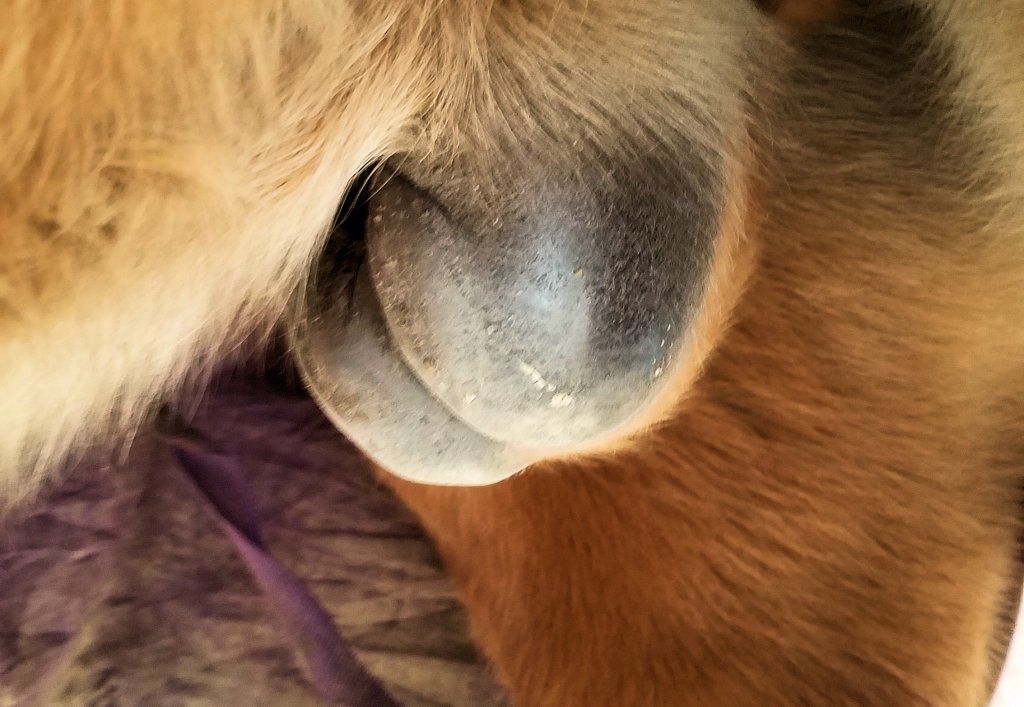
Not everybody can stomach cleaning a sheath. I can. I figure it’s all part of the ownership. The key is to not THINK about it. Just do it, get the job done, and wash thoroughly afterward. For those who cannot there are people like me who are happy to help….or your vet.
Some horses are very opposed to their sheaths being handled, many others don’t mind too much if it’s done considerately. If your horse is being sedated for dental it is never a bad idea to use that as an opportunity. Having assisted my trainer with her geldings and doing several others here (Blade, Tiger, Nahe, Vai Via, Zeno Bay) I’ve gotten comfortable with my methods.
If you want to learn how to clean your own horse’s sheath here’s how I do it:
You’ll need:
- Bucket with lukewarm water. It should be as close to body temp as possible or slightly warmer.
- Gentle cleaning solution. I prefer to use Excalibur which is specifically made for this procedure. Others use KY jelly or some other products.
- Fresh clean sponge
- Gloves (I use latex). If you’re queasy easily I suggest long armed gloves.
I also recommend someone to hold your horse in case he acts out. Tiger is the first I have come across that was seriously opposed to being cleaned. For him I actually waited for his dental appointment so he would be sedated. Even then he kicked out some.

It’s helpful to first know your horse well enough to find a scratchy spot or massage area that relaxes him. You don’t want to approach him on a mission. Casually rub him and scratch him and love on him. He might relax and “drop” himself for you (That’s when his penis drops from the sheath).
IMPORTANT TO NOTE: stand safely by your horse’s side to avoid kicking. If you have never done it before and if your horse isn’t familiar with it, make sure to have a friend holding your horse’s head to prevent biting.
When he’s dropped I take a squirt of Excalibur warmed up and apply it directly to his parts. He will probably suck it back in and that’s ok.
If he doesn’t drop for you, you can still get the job done. That’s why you have longer gloves.
Using a gob of warmed up Excalibur (warm it in the sun or in your hand) casually rub the gel inside the sheath. Start in the front and slowly work your way in. You will feel all the crusty buildup. Use enough gel to loosen everything up. You will start to feel pieces loosen up and you can pull them out. You might want to let the Excalibur sit for a minute or two before you start removing, it’s a lot easier that way.
After a few minutes the gunk should be loosened from the sheath wall. Now using a new fresh clean sponge (I buy tack sponges or non-scrubby dish sponges and cut those in 2 or 3 pieces). Soak in the tepid water and work out the dirt and debris from the sheath.

You will be surprised how sucked up your horse can be and you may have to reach pretty far back, hence why I suggest long arm gloves (I wish I had thought of those sooner). As you work your way farther back in the empty sheath you should eventually feel around to find the pocket his manhood hides in. This will also need cleaning, work around some Excalibur to loosen it all up.
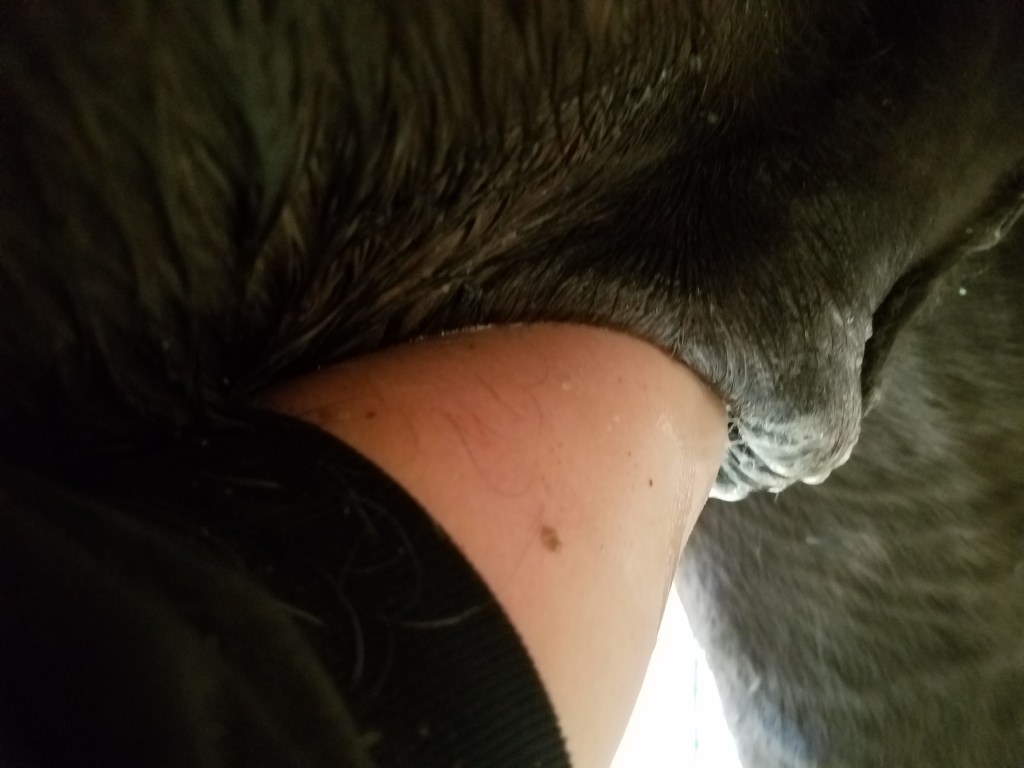
Finally, and the most important part of the whole ordeal, is to find the BEAN. You will need to locate the tip of your horse’s penis and his urethra. At the very end is a pocket called the urethral fossa. Shmegma and debris collects here to form a foul ball. Some beans grow to be absurdly large and uncomfortable. The bean is mainly to blame for the behavioral and health complications so you want to make sure to check and remove whatever is there. I use an index finger and ever so gently find it and scoop out whatever I find (at this point I am elbow deep because this is a very awkward feeling for the horse as well).
Once I have satisfactorily cleaned the sheath and removed the bean I want to make sure I don’t leave behind any chemicals. I saturate the sponge and squeeze it out inside of the sheath to give a good rinse.

I don’t stop rinsing until I am confident that all of the suds are gone. Any residual chemicals can cause irritation, discomfort, or even infection.
Finally, give your horse a treat, tell him he’s a good boy and that you love him THAT much, and for Pete’s sake scrub yourself clean.

Cleaning a horse’s sheath is a dirty job. It’s also smelly. I believe it to be necessary if done carefully. You might be able to do it or you might be able to pay someone for it (I believe you can get it done around here for $30-40). It’s not cheap but it’s also only needed once a year (if you’re in my camp) so that’s why I taught myself to do it.
Just remember. Think about how the horse feels and you’ll be fine. Don’t slosh cold or hot water. If it’s close to body temp it shouldn’t feel like much. Don’t yank, pull, or shove your hand up there to get it done quickly. Allow the cleaning product to loosen the grime. Keep the horse comfortable and maintain a safe distance until you know your horse is accepting of it (I have only had to ask someone to hold Tiger of the ten horses I have cared for, everyone else relaxed and behaved).




 The Green Horseman
Leave a reply to WolfSong Cancel reply