

Growing up feeding grain and sweetfeed to horses was a fact of life. I never questioned it.
When I got Blade I began doing serious research on horse diet and nutrition. He was “diagnosed” with ulcers shortly after I got him. I wanted to do what’s right by him.
The mission?
To provide a safe healthy diet to help Blade with is ulcers but also to help him maintain a healthy weight and positive demeanor.
I didn’t really care about “grain vs. no grain.”
The main thing that stood out in my research.
Horses are grazing animals.
They have small stomachs and are not meant to eat big meals. They should be having small meals throughout the day and grazing as much as possible.
I learned about the horse’s digestive system. Did you know that horses make acid 24 hours per day? In fact, they make 1.5 liters EVERY HOUR.

By spending hours grazing the chewing motion creates saliva, which is swallowed and buffers the stomach acid. Forage fills the stomach and stays there longer than grains. by maintaining forage in the gut it reduces the sloshing of acid up onto the upper walls of the stomach that are NOT protected.
Food then moves from the stomach to the hindgut. Beneficial fermenting microbes here thrive when the pH stays consistent.
Furthermore, I learned that concentrated feeds….grain, commercial feeds, etc, are processed and passed quickly through the stomach. It lowers the pH to create an acidic environment. When too much concentrate is fed it will pass undigested into the hindgut. The sudden drop in acidity can kill off the fermenting bacteria which in turn creates even more problems going forward.
I have a girlfriend who has a thoroughbred (one at the time but now she’s up to three) mare that looks fantastic and only eats one meal a day of forage pellets with supplement. NO GRAIN. The horse is in work and maintains a nice figure with no concentrates at all. This got my gears turning.

Going completely grain-free in a boarding situation was too daunting for me. Blade didn’t have hay at all hours and I wasn’t quite sure what I was doing on that end just yet. (Now that I’ve done the research and seen the results for myself I know I could do it).
I wanted to move toward a 24/7 forage feeding style. While boarding Blade I was unable to make this happen but my farm was extremely wonderful about working with me. We lowered his concentrate and increased his hay.
He also trampled his hay so we installed the Tough-1 hay hoop in his stall. Not only did he eat all of his hay (He got the most of the horses in the barn) but it created much less waste. The net allowed him to “graze” all night long…producing the saliva to buffer his stomach acid.
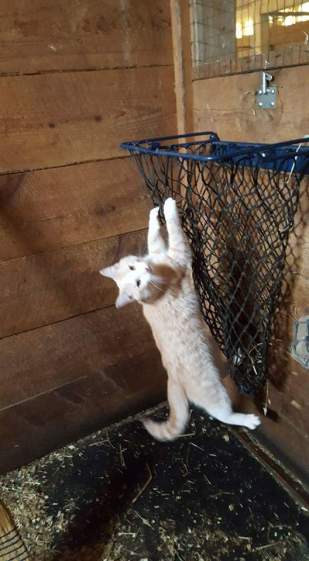
When I moved Blade home I decided to see if I can make “grain-free” work. I saw him every day and could adjust as needed.
The first step I took was determining the caloric content of Blade’s current grain since his concentrated feed worked for him, he looked great.
I compared forage pellets and found a supplement that I liked. I began with California Trace but ultimately decided to stick with Vermont Blend by Custom Equine Nutrition.
On average a horse needs about 16-20 MCAL per day (Megacalories). Most of this comes from hay.
Hay varies greatly in nutritional value, but for simplicity let’s say that grass hay ranges at about 0.8MCAL/pound.
Alfalfa is slightly more, coming in at about 0.9MCAL/pound
Really though, I didn’t look much at the hay. I planned to have it readily available to him 24/7 at home. He had plenty of 1st cutting grass hay (some clover mixed in).

.I was primarily concerned about complementing the hay.
I had been feeding Blade Nutrena SafeChoice Original. So I looked for information on its digestible energy (MCAL).
Most feed manufacturers will not tell you all of this information…that only led me to want to stop feeding it even more. I asked the top three feed manufacturers in my area for more information and was shot down by all three…being told that all they will provide is what’s on the label.
My favorite nutrition blog, however, had posted a beautiful listing of the MCAL contents in many horse feeds. Formulas may have changed since it was published but this is a good starting point.
**There’s a link to the Equine Nutrition Nerd blog at the bottom**
It’s importnat to note that nothing about this is exact. No science has agreed upon numbers for dietary needs of horses…or even humans. As individuals we and our horses require slightly different things. That’s why we alter our diet and our horses diet until we find what works. Seasons, workload, and other life events will continue to require us to look at feed and make changes.
Nothing is constant.
Nothing is exact.
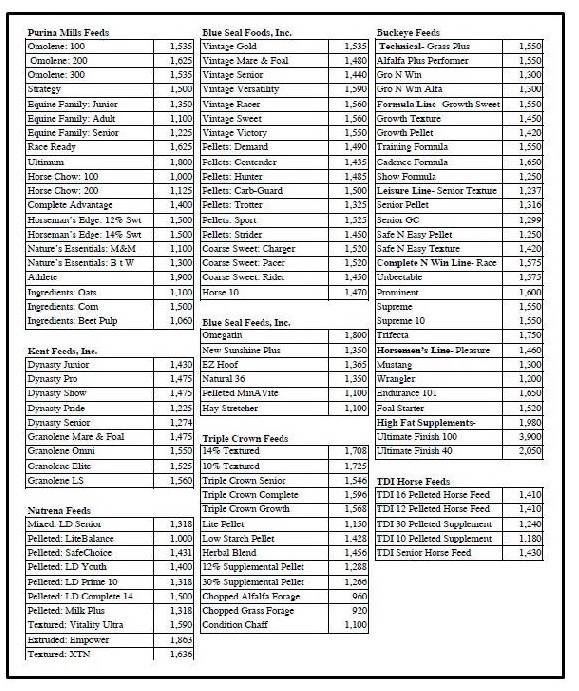
Nutrena SafeChoice Original is listed on the chart at approximately 1.4MCAL/pound.
Hay stretcher, on average, is about 1.1MCAL/pound.
Therefore if I fed 4 pounds of SafeChoice I’d need to ultimately replace it with about 5 pounds hay stretcher if I wanted to provide the same calorie content (that does not mean it’s the same nutritional content but let’s not get ahead of ourselves).
Another important this I want to point out is
CHANGING A HORSES FEED IS NEVER SUDDEN.
It took me more than a month to fully transition Blade off the SafeChoice.
The first step was to introduce the supplement to make sure he’d even eat it.
I chose Vermont Blend because it was designed to complement the AVERAGE hay profile in the northeastern United States. Our soil here is high in iron so Nicole omits it from the formula. She has done a lot of research to get the numbers and even recently updated the formula to a more recent hay profile testing. Essentially this can be fed with hay and the entirety of the horse’s nutritional needs will be met. Considering it’s a powder, however, I chose to combine it with SOMETHING…hence mix with forage pellets.
I ordered Vermont Blend and started by added small amounts to his feed. By doing this he learned about the new smell VT Blend added and developed a taste for it little by little.
**There is a great link at the bottom that goes deeper into how to introduce something new to your horse’s feed regimen**
As Blade came to accept the supplement I began replacing the grain.
He already ate alfalfa and beet pulp pellets so I kept this the same.

I reduced his concentrated feed week by week while increasing the hay stretcher until the last of his concentrated grain was gone and he was cruising grain-free.
I wasn’t 100% satisfied so I went back to researching. I didn’t like his underdeveloped topline. Although work and exercises are the best way to fix this I also learned that Vitamin E plays an important role in muscle health as well as the central nervous system and many internal organs. Grass contains vitamin E but once it has been cut for hay the antioxidant degrades fast.
I added Vitamin E to Blade’s diet and was very happy to see him doing better. His topline improved and he seemed to have a better disposition overall.
**You can get Vitamin E AND Vermont Blend at Custom Equine Nutrition; link is at the bottom**
I didn’t get a chance to work with the formula more on Blade, but I came to realize that he needed LESS in the winter than he did in the summer. He lost weight in summer and it seemed I was always playing catch-up to get him back. He would burn calories through sweating, kicking and swatting away flies, and of course our riding. I also noticed he stood around more. When it got hot he wasn’t as interested in his hay. In the winter he spent more time eating and get fat easily.

Zeno Bay and Vai Via were easy to go grain-free. They came to me as blank slates, having had no prior grain (to my knowledge). I simply added Vermont Blend and their forage pellets and they were happy and healthy.


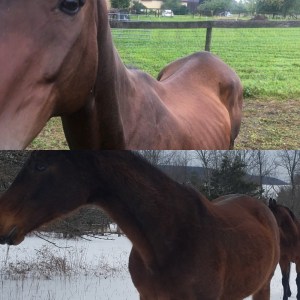
Tiger has proven to be super easy. So far this winter I have had to CUT DOWN his feed on account of him becoming a land whale.

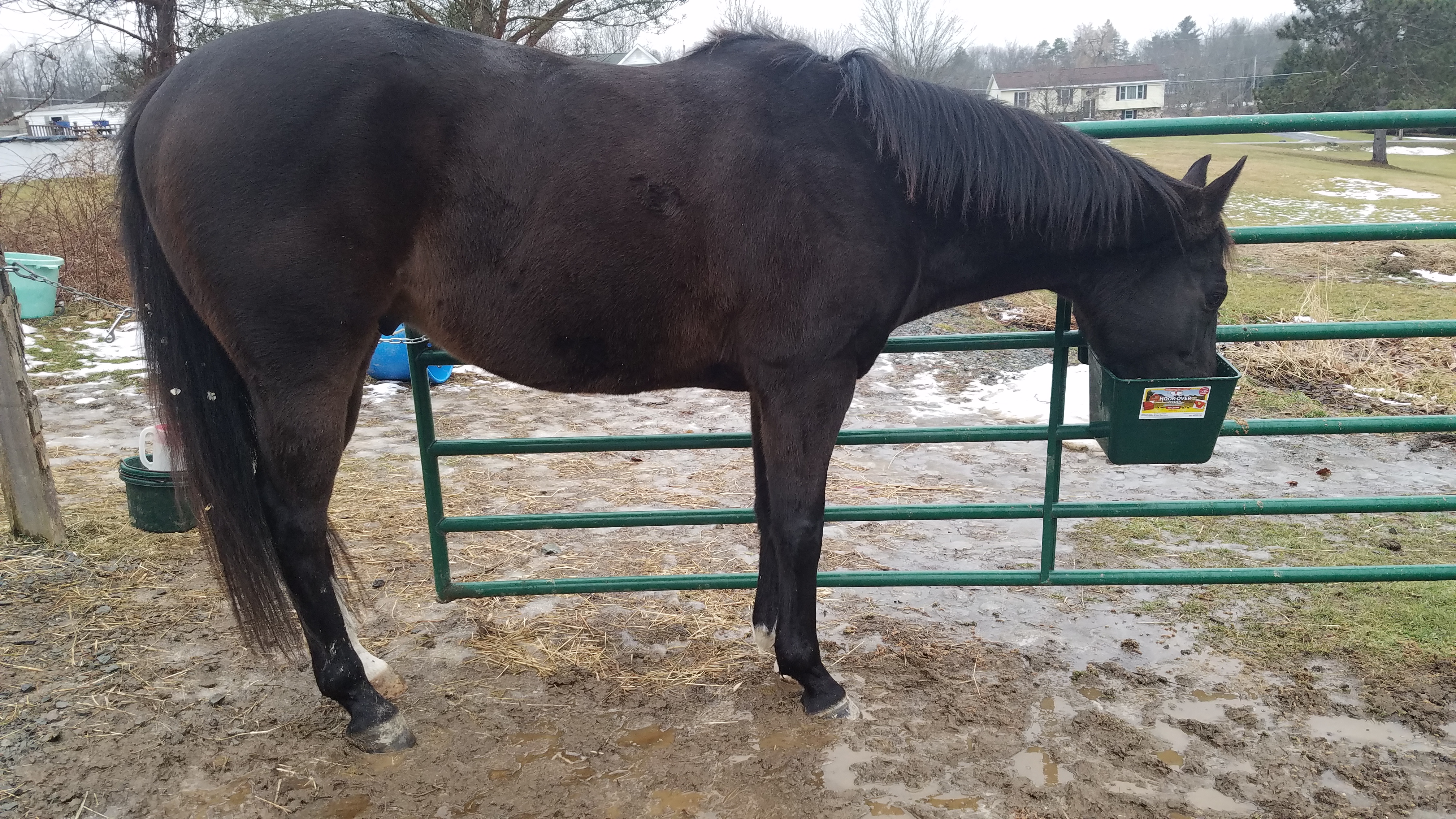
I have had to add other sources of calories to plump them up, particularly in the summertime when the horses are working and moving more.
My top go-to’s for added calories:
- Alfalfa pellets: This is a healthy low sugar, high protein, and moderately high forage pellet at 0.9-1.0MCAL/lb. This provides calcium to buffer stomach acid as well as to balance phosphorus, which is high in the other items I supply.
- Flaxseed: I choose to feed flaxseed because it offers healthy fatty acids and is approximately 40% fat. This is high in phosphorus so I make sure to feed with alfalfa.
- Beet Pulp: Beet pulp doesn’t offer much nutrition but it does provide a great source of highly digestible fiber. This is the pulp leftover from sugarbeets after all the sugar has been extracted. Therefore it’s low sugar. The digestible energy comes in at about 1.3-1.5MCAL/lb. I don’t usually feed more than 1 pound per day and it’s recommended to feed no more than 3lbs/day. A little goes a long way.
- Stabilized Rice Bran: This is also high in fats.
- When I’m trying to put a lot of weight on short term I will go to canola oil, but the omega3/omega6 content is skewed so I keep it short term. Zeno Bay got this at first when he arrived.
This simply goes to show that horses CAN go grain-free IF YOU DO IT RIGHT.
The Main Thing Is:
- Do it slowly
- Add the nutrients that hay does not provide
- Add enough calories to suit your horse’s needs
- Be patient
- Pay close attention to your horse’s body. Take photos if you need to.

LINKS
- Nutrition and Feed Management for Horse Owners
- A book that covers pretty much everything
- The Equine Nutrition Nerd
- My favorite horse nutrition website
- Tips on Introducing New Feeds/Supplements
- Deep dive into why horses reject feed changes and how to do it right
- Custom Equine Nutrition
- Your source for Vermont Blend, Vitamin E, and other great things. PLUS a $5 discount for using this link.
- Forage
- Information on the content of various forages
- Barnyard Chemistry
- Information about the pH and the digestive tract



 The Green Horseman
Leave a reply to Nutrition: AGAIN. A Visual – The Green Horseman Cancel reply