
Ulcers have been the bane of my existence since entering the horse world with an off-track thoroughbred. Since then I do research and take great strides to create a gut healthy lifestyle for ALL of my equine companions. I cannot prevent them entirely, but I can certainly do my best.
Check out some of my previous posts:
- Monthly Topic: The Digestive System
- Fast Facts About The Equine Digestive System
- Monthly Topic: Ulcers
- Treating and Maintaing Ulcers
- Updates on My Favorite Topic…Ulcers
- RULES OF THUMB TO ESTABLSIH A GUT FRIENDLY LIFESTYLE
The horses have a concentrate-free forage-based diet. No starchy sugary meals!
They have free access to hay at all times, more chewing=more saliva=more buffering.
Before riding I feed alfalfa and Purina Outlast.
The horses get an omeprazole regimen before, during, and after travel.

In March 2025 I posted the article with recent updates to the topic of Ulcers. I had read and mentioned that injectable omeprazole was proving to be incredibly effective in other countries, but the effective formula was not yet available in the United States.
As it happens…Epicur Pharma made a press release a couple weeks before I released that article. The release…mostly available to veterinary clinics…announced that the same formula will now be available in the United States. It took several months before it made it through all the systems and came into my radar.
See the press release yourself:
https://epicurpharma.com/wp-content/uploads/2025/02/Epicur-Pharma_Omeprazole-Announcement-FINAL.pdf
I don’t mind using the compounded powder. I shake the jar before use. I use applesauce to thicken the solution…I use 100cc syringes. But I have to administer it 30 minutes before feeding and Stanley isn’t always so willing to take the medication. The applesauce has helped prevent him from spitting it out but I always wonder if the compound actually makes it to where it needs to go.
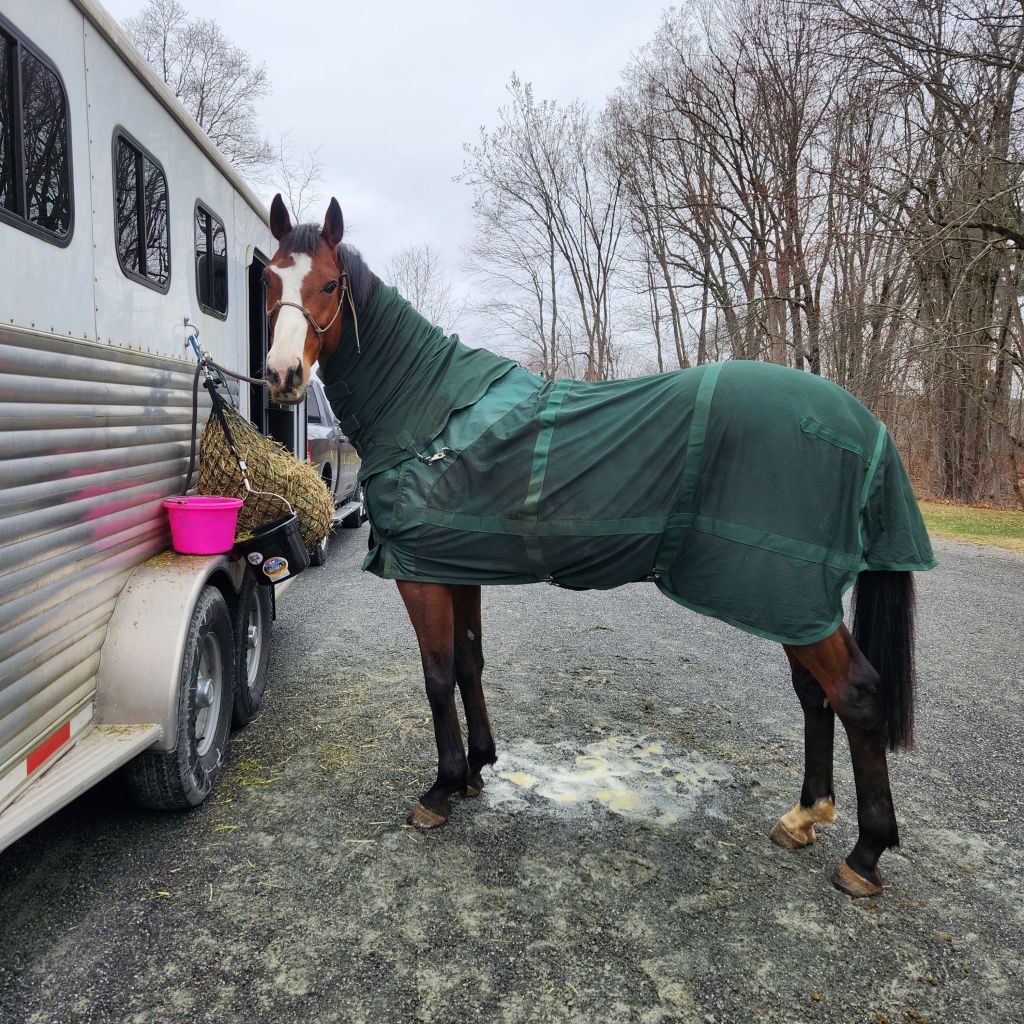
With my big trip ahead of me to Aiken South Carolina I started talking to my vet about it. Had she heard of it? What are the details? Cost? I needed to know more. I was SO EXCITED this new solution was available!
So we decided to order it and use it for my trip.
The Facts
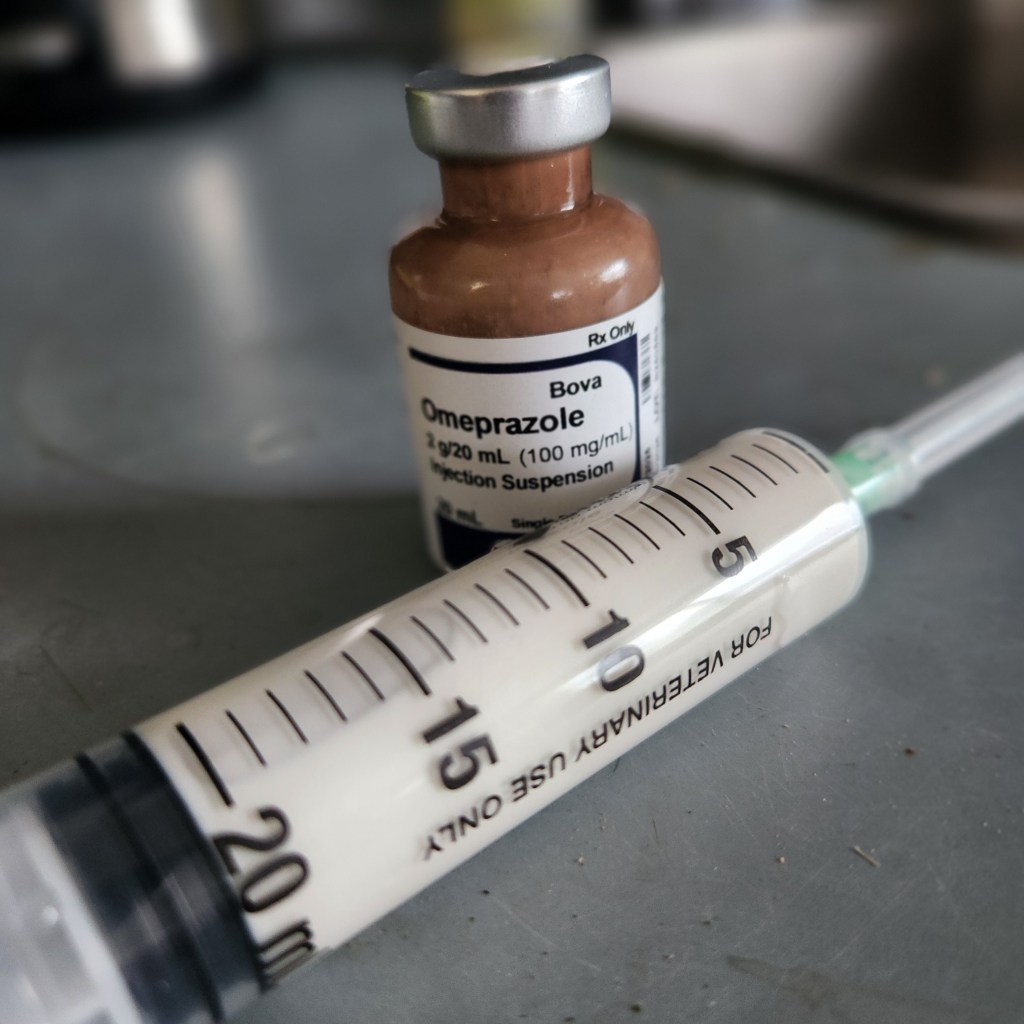
The Epicur injectable solution is 100mg/mL and is designed to be given 4mg/kg (20mL) into the neck or the glutes. They specifically mention to avoid the pectoral muscles.
Full injection is administered in one location.
Because of the quantity and composition of the omeprazole it’s recommended to use a 20mL syringe and an 18 gauge needle.
Keep the solution refrigerated until use. You can allow it to warm to room temperature before injecting.
It’s also very important to note that this specific formulation is the only one available at this time with the success rate it has. There are other injectables that come with increased risk of complications and less effectiveness. If you use this make sure it’s the correct one.
The PROS
Each injection lasts 5-7 days.
No daily syringes 30 minutes before feeding.
The horses don’t need to fast in order for this to be effective.
More bioavailability.
The results are more consistent and faster working compared to oral routes.
The rates of healing are up to 4 times higher than the paste and have suggested clinical cures where the traditional oral routes have failed.
Manufactured 100% in FDA approved facilities.
The CONS
The caveat is the price.
For three weeks of treatment while I am away…3 vials…I paid $1020. $340 per vial (per week).
The liquid is also very thick. It’s thick to take up and thick to dispense.
Because of how thick the medicine is and how MUCH (20mL!) you need to use in one location you need to use a large 18 gauge needle.
Luckily I have an incredible horse who is very good for me with injections (I use a halter for this one but don’t need to…and don’t need a halter for his Adequan).
My Thoughts
In my eyes this is a small price to pay for absolute certainty…but it’s simply not practical for a preventative routine.
Who should use it?
- Horses with confirmed ulcers
- Horses that spit out all pastes
- Horses that have not had success in the older methods of ulcer treatment
- Horses and owners in complex situations where daily administration may be difficult or unreliable
- The very wealthy
Will I use it again?
Possibly.
Having a peace of mind really is comforting but when I am adding it to my regimen as a preventative measure I think it’s a little extravagant. I already committed to it…and I was extremely excited about it…so I tried the one time, and for our trip to Aiken it was a good time to use it.
For the future, however:
- Stanley does well when I administer compounded powder with applesauce.
- Compounded powder can settle so sometimes the dose is unreliable…I make sure to SHAKE my jar before each use to redistribute and homogenize the medicine
- He would also do well if I upgraded to Gastrogard or even Ulcergard paste.
- These are practically the exact same product. Gastrogard is more expensive and available through vets Ulcergard is available over the counter. Rebates are often available for multiple tubes.
- Gastrogard, having been the expensive Gold Standard for many years…is still cheaper than the Epicure injectable solution.
- Even a full tube each day is cheaper and for travel we typically do 1/4 tube.
Your Turn.
If you had 4 times the chance to fully resolve your horse’s ulcers (presuming, you confirmed he/she in fact has ulcers) would you pay more for the injectable solution? Four weeks’ worth of treatment would cost anywhere between $1340-$2040 (on the basis of 1 injection=$340 and 1 month would use 4-6 vials depending on prescribed frequency of 5-7 days).
For perspective, Gastrogard currently costs $1100-$1350. Gastrogard claims to heal or improve 99% of ulcers; I’d love to see the comparison between “healed” and “improved”. I’m also looking to find the studies of Gastrogard versus the Epicur.
As always, do what you can to keep those delicate horse guts happy!

 The Green Horseman
Leave a comment