
I have lived in the northeast for my entire life. Winter here is not something we are unfamiliar with nor is it something we take lightly. Every now and then we get some big storms that gets everyone worked up.
Winter Fern is our first big storm of the season. We have had storms drop 5 inches, 6+ inches, but Fern is slated to affect much more than just us in the Northeast. Most of the mid and eastern United States will feel the impact…some already are.
With winter storms like this I have a few routine plans in place.
FORAGE
A horse uses long stem forage to fuel its internal thermostat. Fibrous material leaves the small intestine and enters the cecum where billions of microbes ferment and break down these fibers. Fermentation can take place for up to 7 hours.

For more information on the digestive system check out an older post: Monthly Topic: The Digestive System
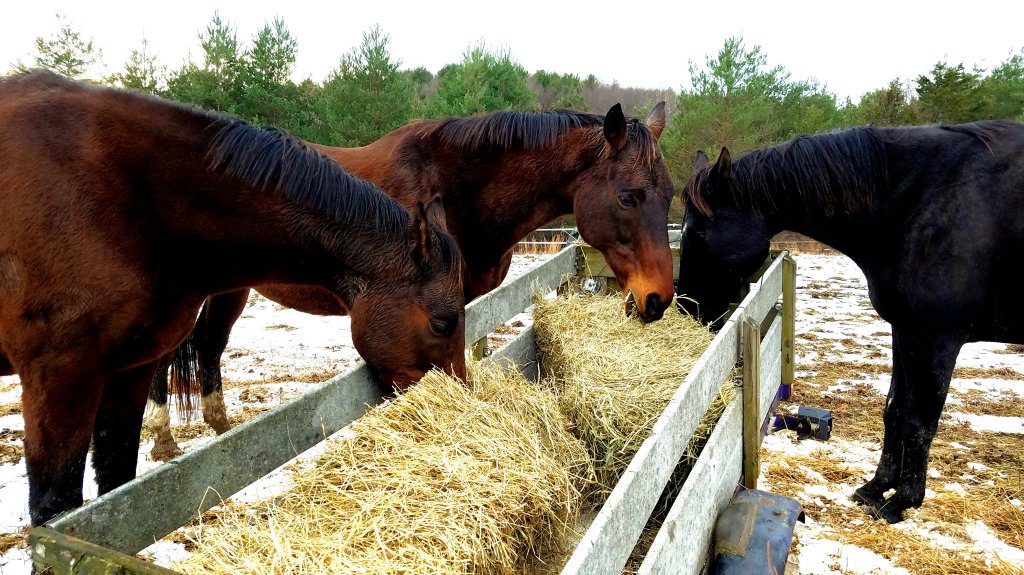
It is absolutely critical that horses have access to good quality forage. If you feed a limited number of flakes GIVE EXTRA HAY. During this time your horse’s body is working overtime to keep it warm.
WATER
Not only is frozen water concerning but horses tend to drink less water when it is icy cold. Making sure your horse gets enough water is critical in winter…especially during the winter storm.
A few water tips:
- Try offering warm water if you can. If not available at your barn get a $20 electric kettle and mix with cool water to offer your horse a nice warm “tea” at least once a day.
- Tank heaters work excellent. Just make sure if you need to ground it or have it properly installed. I will include a link to the heater I use in my Rubbermaid trough that has been phenomenal.
- Note: Horses can be sensitive to the electrical currents and might stay away. Best practice is to monitor closely. You can even try to turn the heater on at night and unplug it completely during the day to give the trough some time where the electricity is NOT in use. This will allow the water to stay liquid while giving time for your sensitive horses to enjoy the water.
This is the de-icer I have and it worked wonderfully. My friends have purchased other brands that seem to require replacement often. I have the 1000watt in my 100 gallon tank. I bought it in 2023. K&H Thermostatically Controlled Stock Tank Deicer

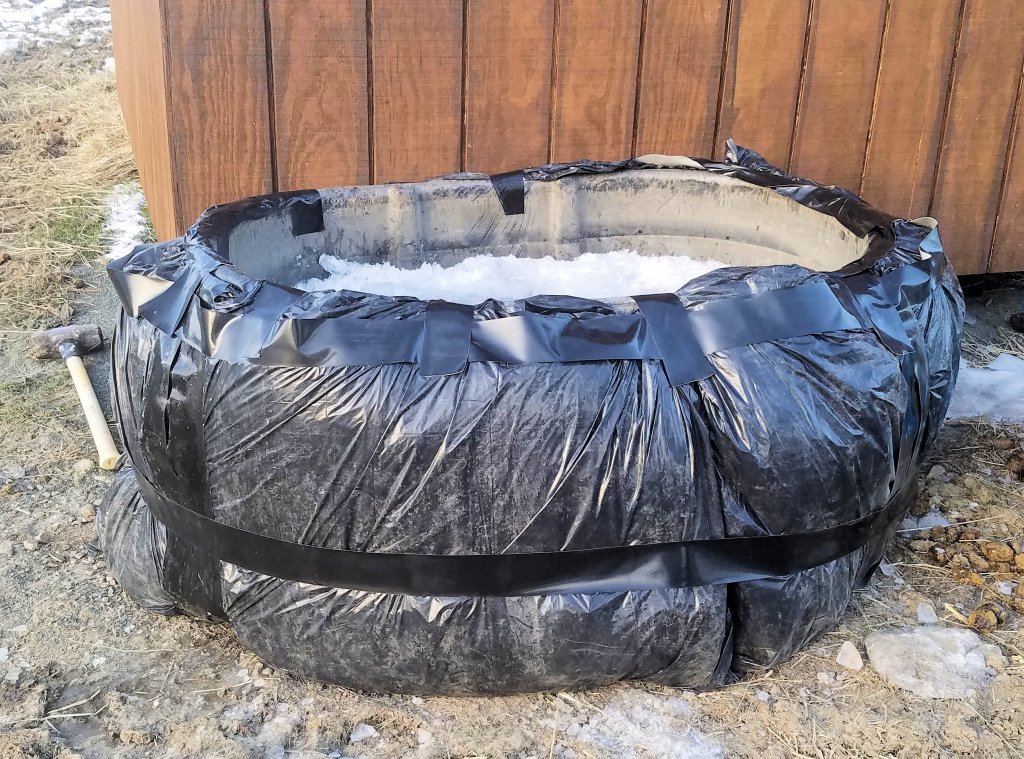
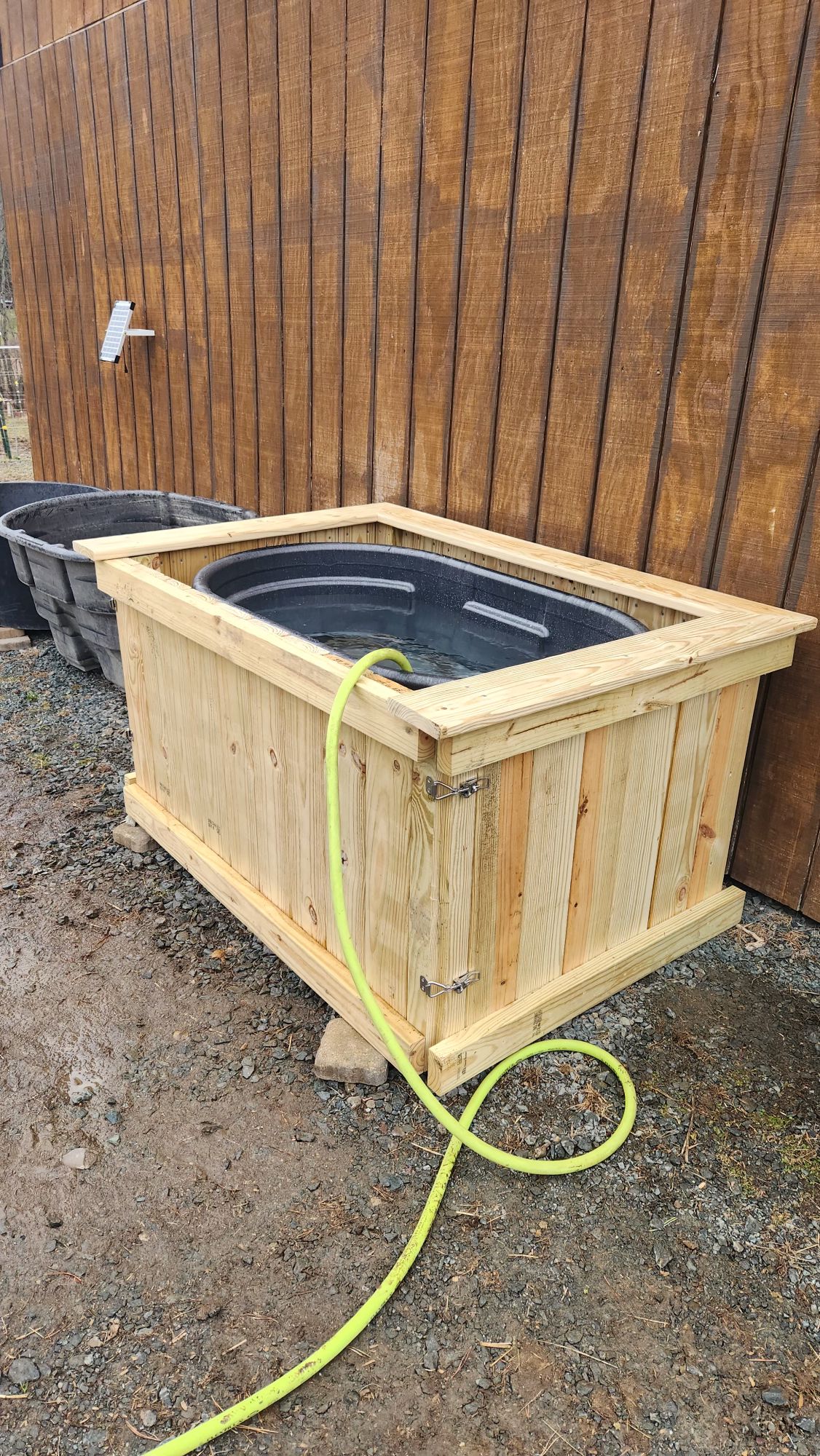
- Insulated buckets. You can build insulated boxes. You can buy insulated covers. You can even DIY it! It doesn’t resolve the frozen water completely but it helps…and if you use a heater it will help reduce the electric bill!
Check Out My Very DIY Make from 2018: Blade Chronicles: I Also Prefer My Water Liquid: Helped in a pinch but not a long term solution.
Also DIY is wrapping 5 gallon buckets with several layers of bubble wrap and several layers of duct tape! These lasted us a few years at our farm.
- Offer electrolytes. There are a lot of options here to encourage drinking. If you add a bucket of electrolyte water make sure to also offer fresh water!
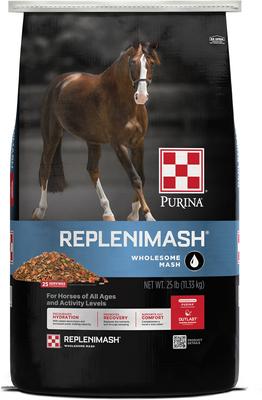
- I especially LOVE offering my horses Replenimash in the winter. It is made by Purina and my horses go nuts for it (I use it after exercise too). The product offers electrolytes, beet pulp, and a seaweed derived calcium source that helps with gastric health.
- Other ways to encourage drinking:
- Sweet feed/Senior feed in the water
- Molasses added to water
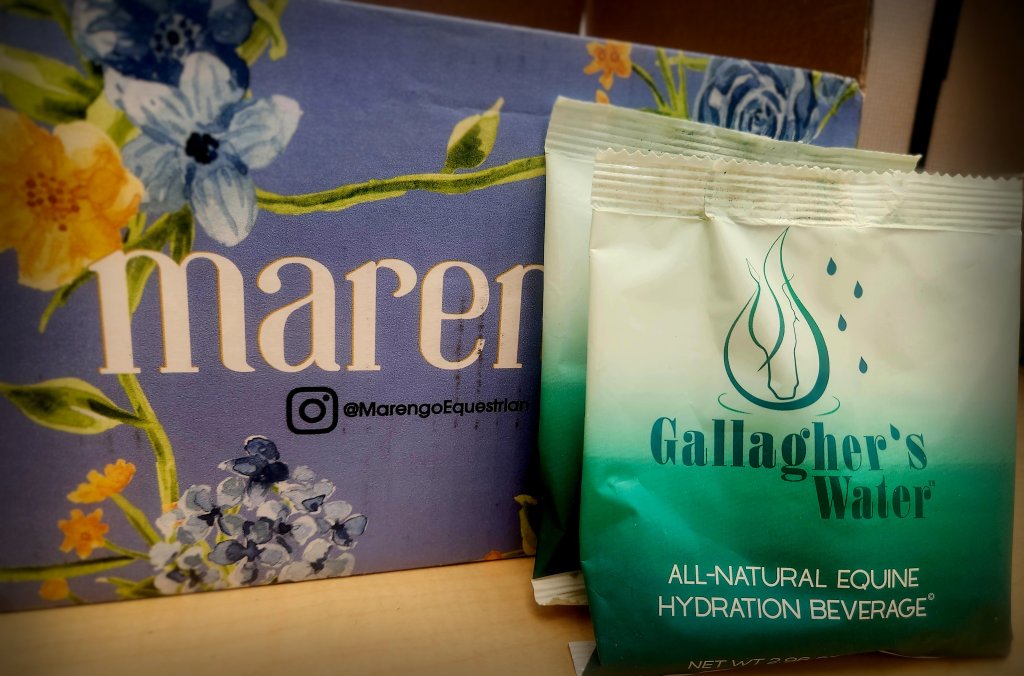
- Gallagher’s Water: This helps flavor the water like alfalfa
NO NEW FOODS!
People love to offer bran mashes….but the reality of this is that bran mash can only HURT your horse.
If you don’t regularly feed bran your horse’s digestive system will be a little shocked by the new food. This can cause potential gastric upset and possibly colic.
Adding water to meals is a great idea.
Replenish is a great option.
If neither of that work, try getting some hay cubes of timothy pellets and giving those to your horse in a warm mash. The timothy is a low NSC hay and it tends to expand really nicely with warm water. It will add water and warmth, it will add good forage, and it won’t upset your horse’s digestive system.
BLANKETS
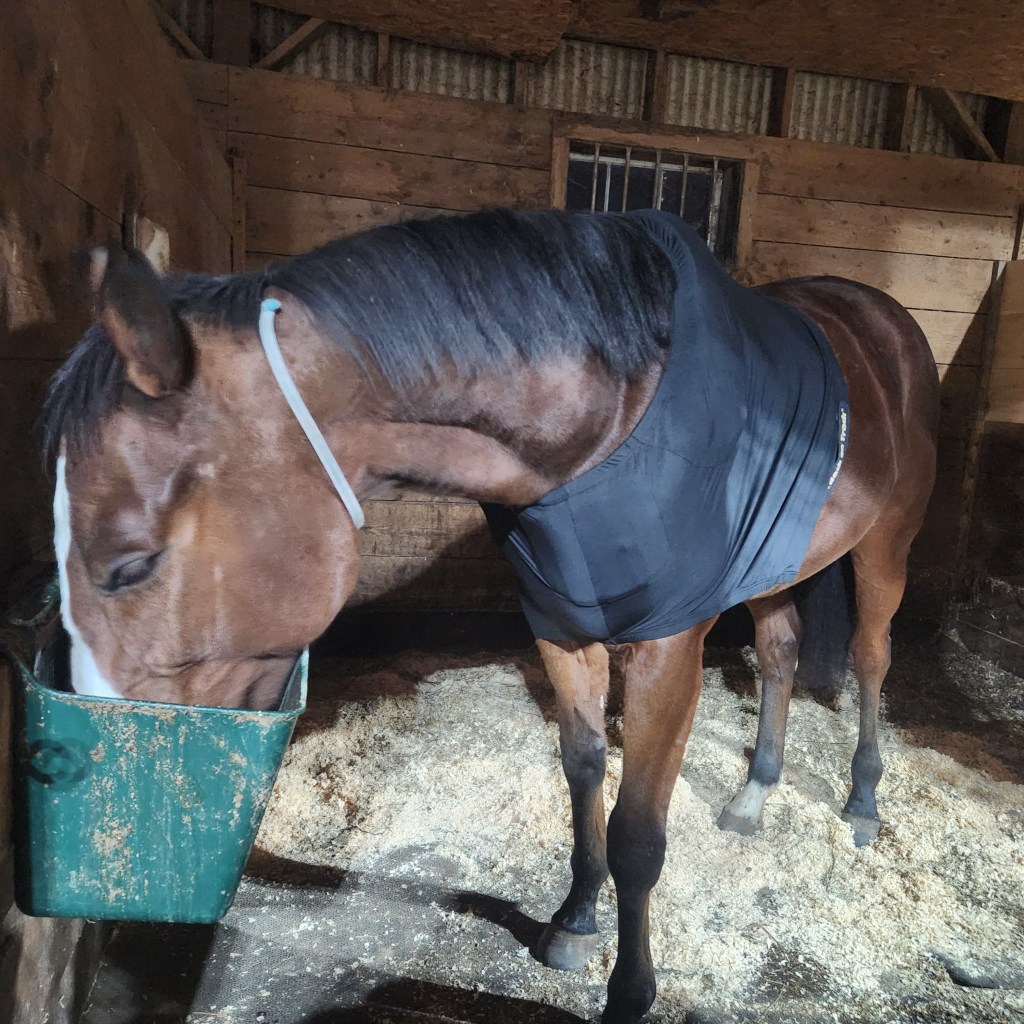
Not all horses need a blanket. The horse’s natural winter coat in theory should protect it but in wet/windy conditions this can change things. Lack of shelter can add risk. Clipped, underweight, older, or sick horses are also more at risk. Horses that are not accustomed to the cold can also be at greater risk. This is where you need to watch each individual horse carefully and make the appropriate call.
A cold horse will shiver and that can burn a lot of calories. This can also distress the horse, cause muscle stiffness and lethargy. Keep an eye out for the horse’s breathing and general demeanor.
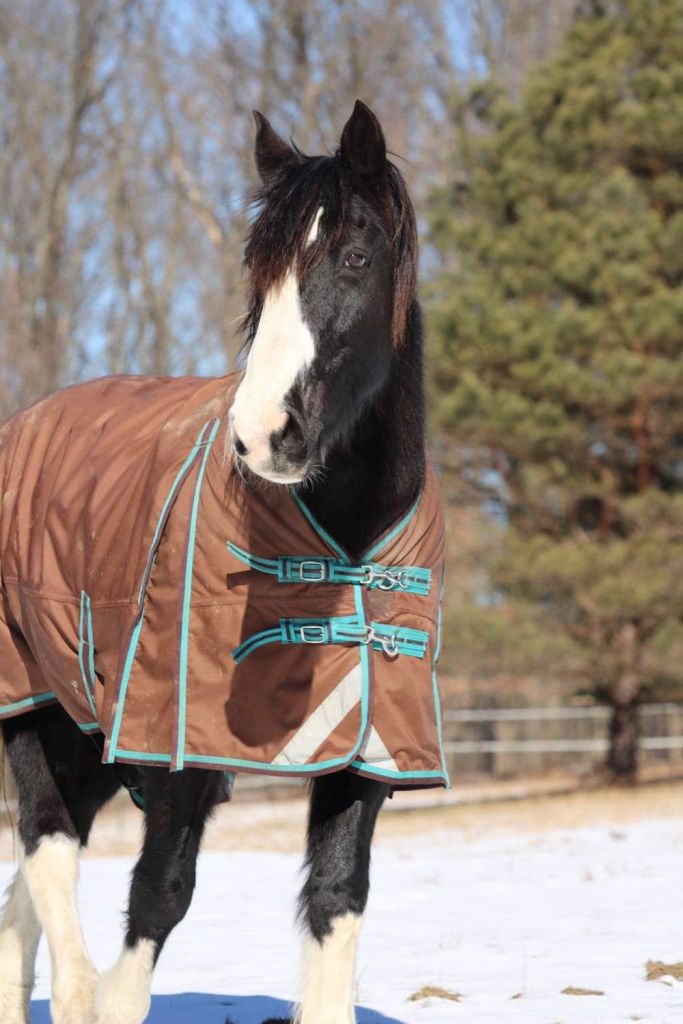
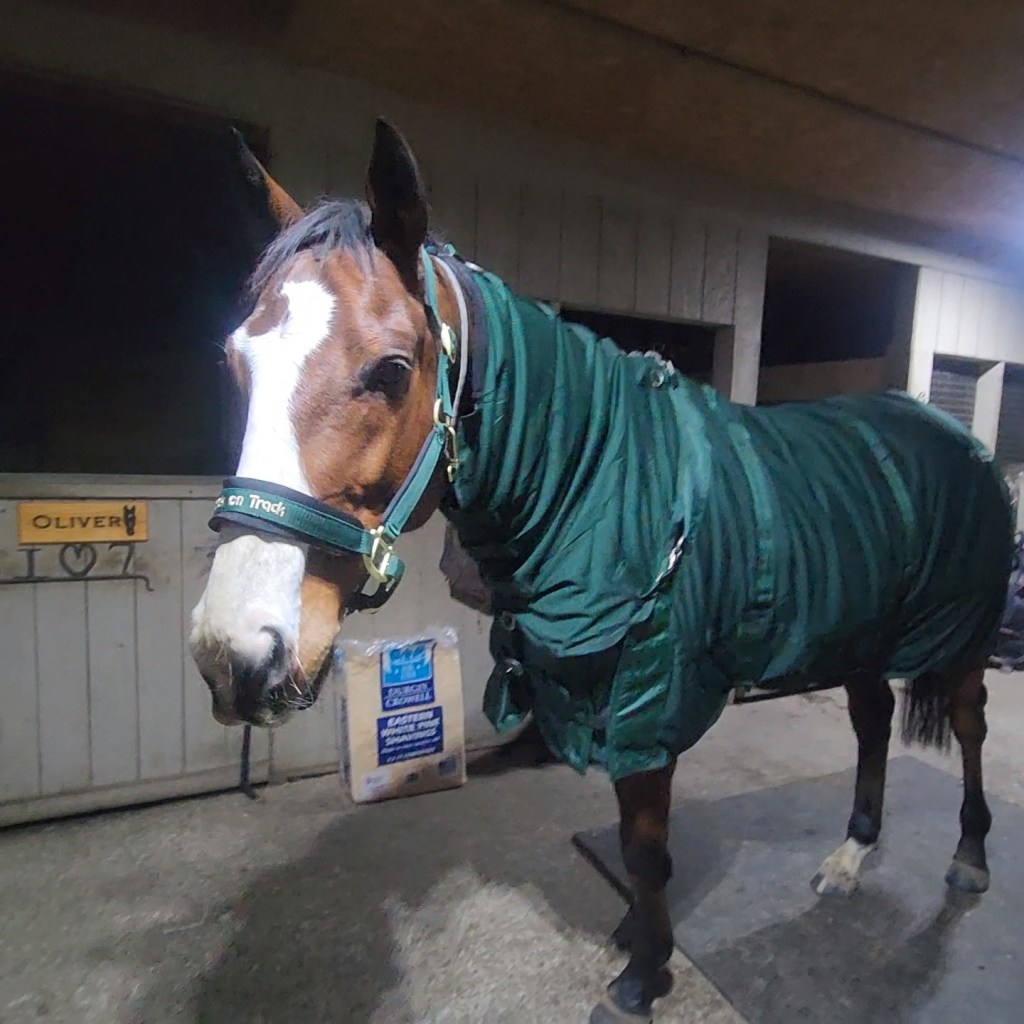
I would rather be overprepared than underprepared. My horses are wearing heavyweight blankets with hoods. I have extra layers available because my retired horse, Nahe, tends to be more sensitive to the cold temperatures. We look at and feel him multiple times each day to make sure he is comfortable and happy.
If you are in the NO blanket camp, that’s fine. Watch your horses. Understand that there may come a time the DO need a blanket so have them handy (At minimum a 0g rain sheet and a heavy(er) blanket for emergent needs). Invest in good storage so they last a long time.
Every time winter storms come along, I see a spike of ISO adds on Facebook where people are looking for free blankets for their horses. Don’t be that guy…have your plan and blankets BEFORE it’s an emergency…even if you don’t end up using them.
SHELTER
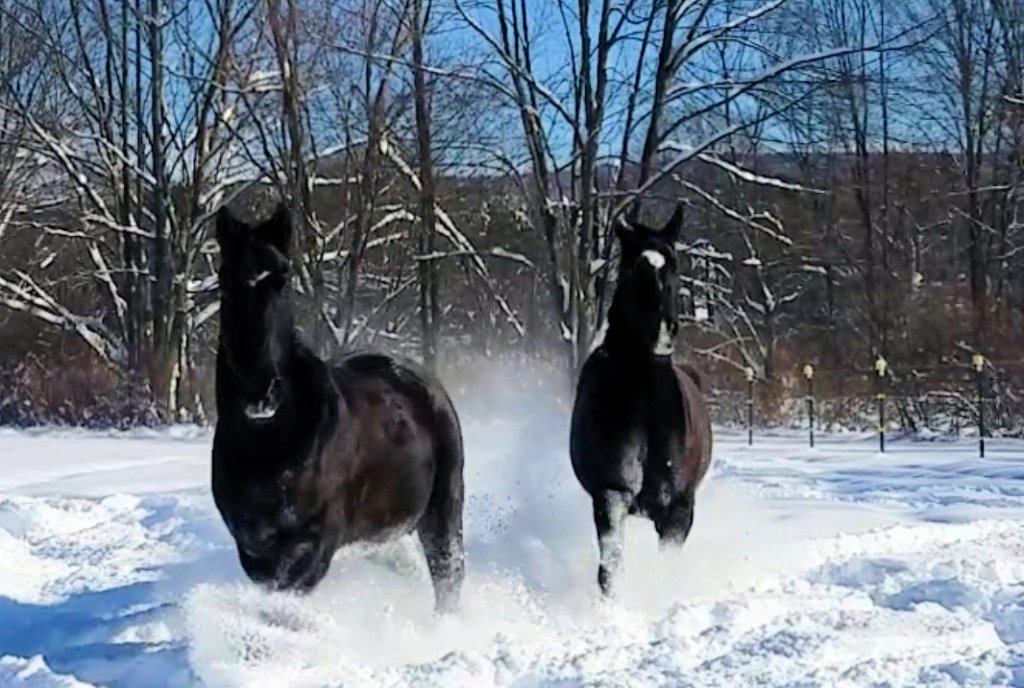
The two retired horses at my horse don’t have stalls. They have a 12×12 shed that has 3 sides. It protects from the rain and snow but can still be cold and windy. Their hay hut is outside the shed so in order to eat they stand in the elements. For that reason, I blanket mine a little more.

A horse does need some type of protection to get out of the harshest elements. At the bare minimum a cove of trees that can serve as a wind break with enough tree cover to take away the worst of the precipitation.
If you have horses stalled…make sure there is enough air circulation. It may be warmer but poor circulation can create a whole new set of issues with the horse’s respiratory system. Cold and fresh air is better than warm and dusty.
Also note that a stalled horse cannot move its body as much as a free-range horse. Movement helps to generate heat. Your stalled horse might still need a blanket so don’t forget to monitor those stalled horses.
FINAL NOTES
Winter Storm Fern is upon us. Many more people will be feeling the winter weather, particularly those who aren’t accustomed to it.
The roads in areas that don’t typically see weather are going to be treacherous. Take precautions if you have to drive to the barn.
There may be power outages. Be prepared with blankets and fresh water in case you need it.
Don’t forget to disconnect your water hoses from the hydrants (they freeze more that way).
Don’t forget to move hoses to warm areas or drain them.
Don’t panic. Plan ahead. Know all of your options. Be prepared. Have a backup plan in place.
Don’t change your horse’s routine more than necessary. Make sure they can get plenty of forage, water, and can stay dry.
For us in the north this will be an inconvenience, but I will be thinking of all of you south of us!


 The Green Horseman
Leave a comment