
As we’ve previously learned horses in general are pretty susceptible to ulcers. Even when not in work there’s a shockingly high percentage of horses that experience ulcers at some point. In work the number skyrockets.
But for many of us, myself included, not riding/working horses is not an option. Modern horse keeping is one of the leading offenders; traditional methods are created by man for the convenience of man…not for healthy happy horses. Fortunately, there are many steps we can take to give our horses the best chance possible for keeping their sensitive gastrointestinal systems happy.
With excellent horsemanship and care routines we can reduce our horse’s risk. I say REDUCE risk…because eliminating the risk may be impossible. Even feral horses deal with ulcers.
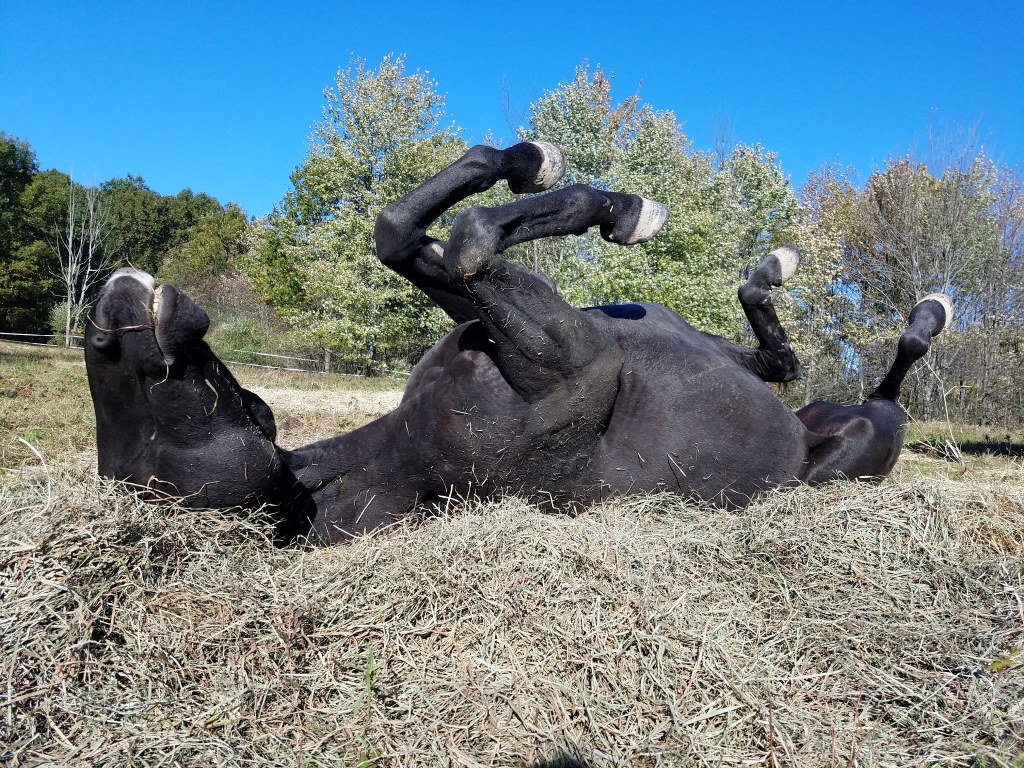
GRAZE
WHY: Horses were made to graze. Their saliva buffers stomach acid. Stomach acid is produced regardless of feed but horses can only produce saliva when they are chewing…so keep them chewing! If 24/7 access to hay is unavailable try to add more feedings to ensure they are fed every 5-6 hours…or get creative to help make the hay last longer. The biggest concern is to make sure that they are not without forage longer than 4 hours each day.
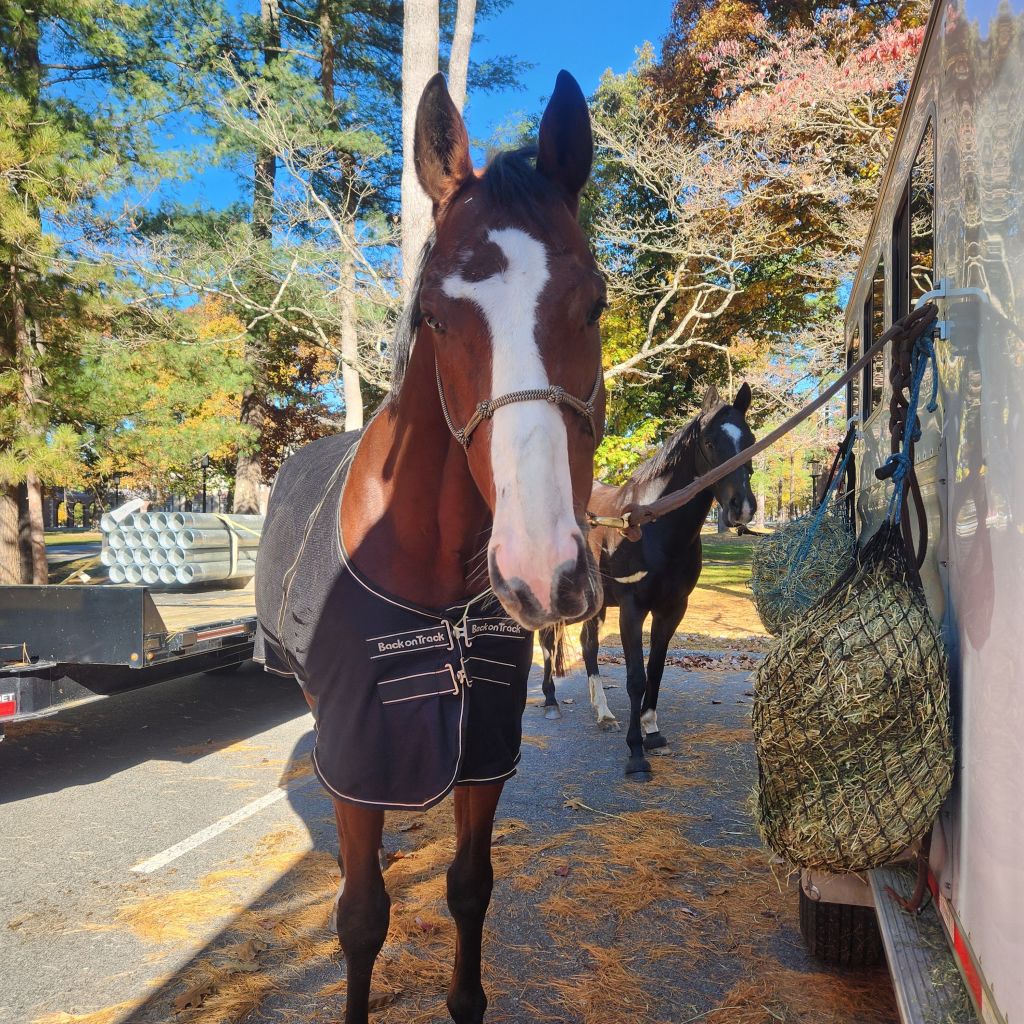
Some ideas: Large pastures with tall grasses (shorter grass contains a lot of sugar, the ideal forage is actually a tall lower quality grass), Hay nets, other non-net grazing tools, timed feeders.
ARGUMENTS: “My horse wears shoes so cannot use hay nets.” Fair argument that is absolutely a risk, especially if your horse paws. My horses do ok but I HAVE had a shoe caught on a net. There are other ways to keep hay in front of the horse without using a net. Get creative and do your research. Writing off hay nets is a poor excuse to give your horse adequate forage.
ARGUMENTS: “Hay nets are bad for their teeth.” This is a common misconception, and the soft nets do not cause the damage shown on social media. Don’t use metal for your hay feeder and you should be just fine. That said if you want to believe what the internet says there are other options than using haynets. Get creative and do your research.
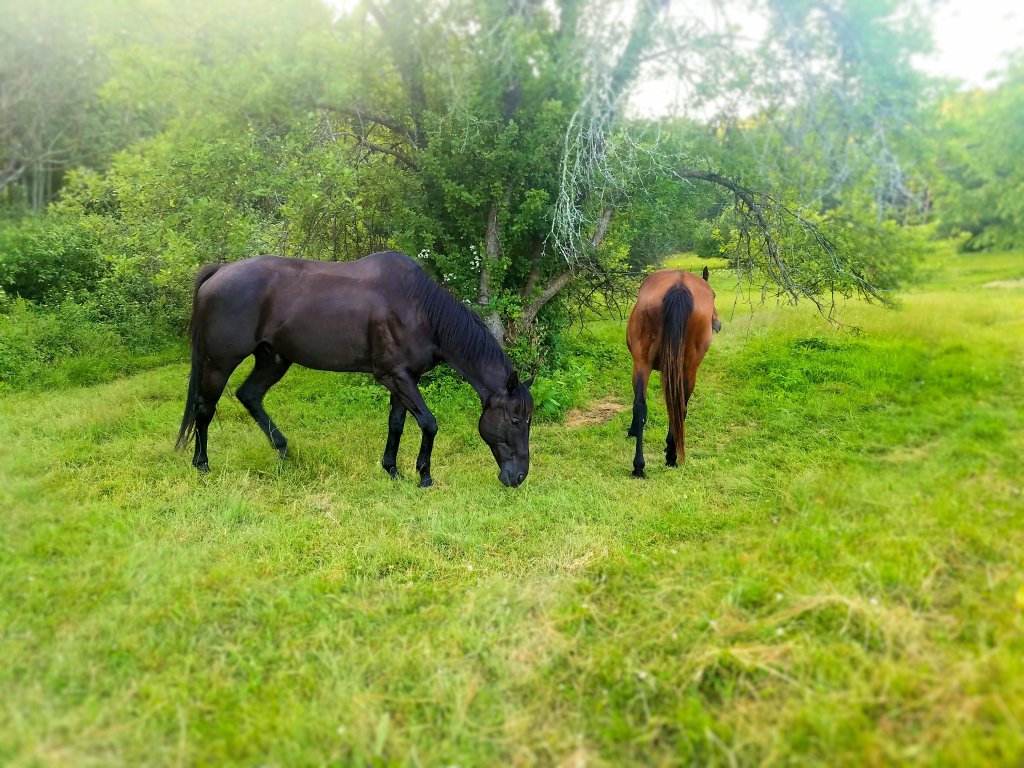
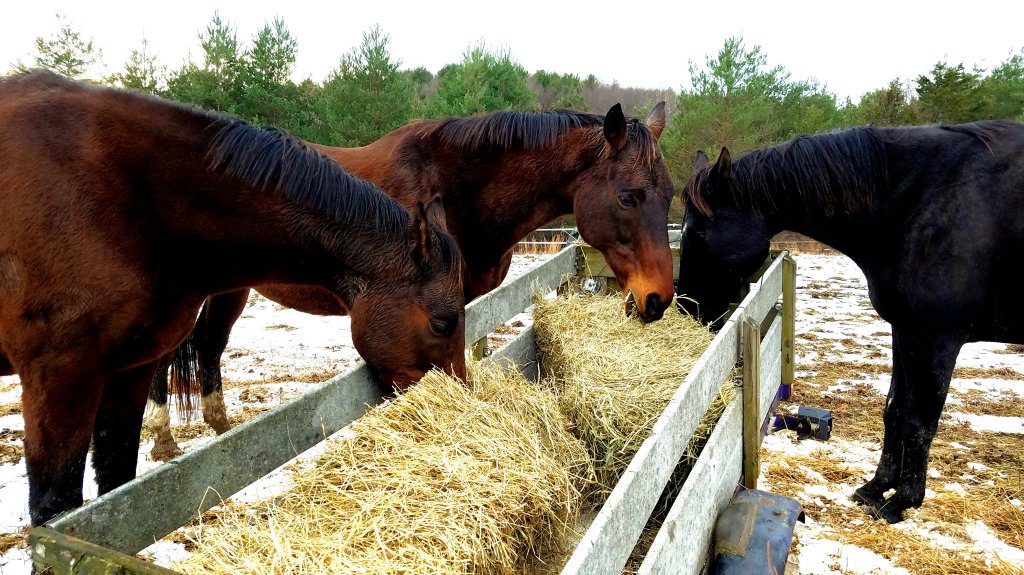

TURNOUT
WHY: Horses are social animals. They need to socialize and move around. The more turnout time they have the better. If available, opt for a 24/7 turnout with a stall as an option in times of harsh weather. All horses are different but in my experience my horses do enjoy being inside when the weather is poor. At minimum aim for 8-12 hours of turnout each day.
ARGUMENTS: “My horses will hurt themselves in turnout.” Knock it off. Your horses are probably hurting themselves in turnout because you drive them stir crazy and feed high starch feed. Turnout itself provides a horse with excellent exercise free of human intervention; it helps define muscle and strengthen bone and soft tissues. Give them enough time outside (and consider not feeding that starch) and they’ll settle down.

LOSE THE CONCENTRATES, KEEP THE NSC LOW
WHY: Your horse doesn’t need them. Highly hydrolysable carbohydrates like oats, corn, and other grains lower the gut pH creating a more acidic environment. They also pass quickly through the cecum. Find a supplement that balances the hay you’re feeding, maybe a couple other vitamins, and that’s enough.
Additionally, horses produce twice the saliva when grazing than they do when eating concentrated feed. Remember saliva is a natural buffer for the stomach acid.
Some ideas: Vermont Blend, Arizona Copper Complete, California Trace, Madbarn Omneity
ARGUMENTS: “My horses work hard for a living so forage based feeding doesn’t work for them.” Not true. You have the ability to increase the amount of calories your horse takes in at meals, as long as you provide the basic supplements to balance the forage (forage doesn’t cover all the horse’s dietary needs). For example I have had over eight horses on the exact same supplement basics…each horse had a different carrier type or quantity to provide the calories needed. Some get more, some get less of the forage pellets. Stanley eats twice as much beet pulp and alfalfa pellets as Tiger and even needs a fat supplement for more calories. But there are no fillers, and no starches. Even then the boys get no more than a pound per feeding. Horses who work even hard would simply get additional calories. There are lots of ways to add calories that are more appropriate than starchy concentrates.
*Also note not all complete feeds are high starch/NSC. There are some excellent complete feeds and excellent balancer pellets. Do your research and if you DO feed a complete feed…you MUST feed the quantity recommended in order for your horse to give him the minerals he needs.

FEED A PROBIOTIC
WHY: A happy stomach contains happy microorganisms. When the microbiome is out of balance the horse is at risk of developing ulcers. Look for high quality probiotics that contain billions of colony forming units (CFUs).

FEED FORAGE BEFORE RIDING
WHY: If the stomach has some fiber in it stomach acid is less likely to slosh around in the stomach. Ideally, you can feed some alfalfa before riding to give an added buffering aspect. As little at 300g (about 2/3lbs) can make a difference. Remember that exercise can compress the stomach and cause more pressure. If you feed alfalfa beforehand at least the acid will be less potent if it comes into contact with the unprotected part of the gut.
ARGUMENTS: “I was told not to feed a horse directly before or after riding.” That is true for big grain meals. Reach for forage. Soaked forage cubes, alfalfa hay, stress free forage. The forage will not be a problem and will help. Ideally I go for the longer stem options (hay/chopped) over pellets because theoretically it will stay in the stomach for a bit longer to breakdown…but I have no research/proof to refer you to on that.
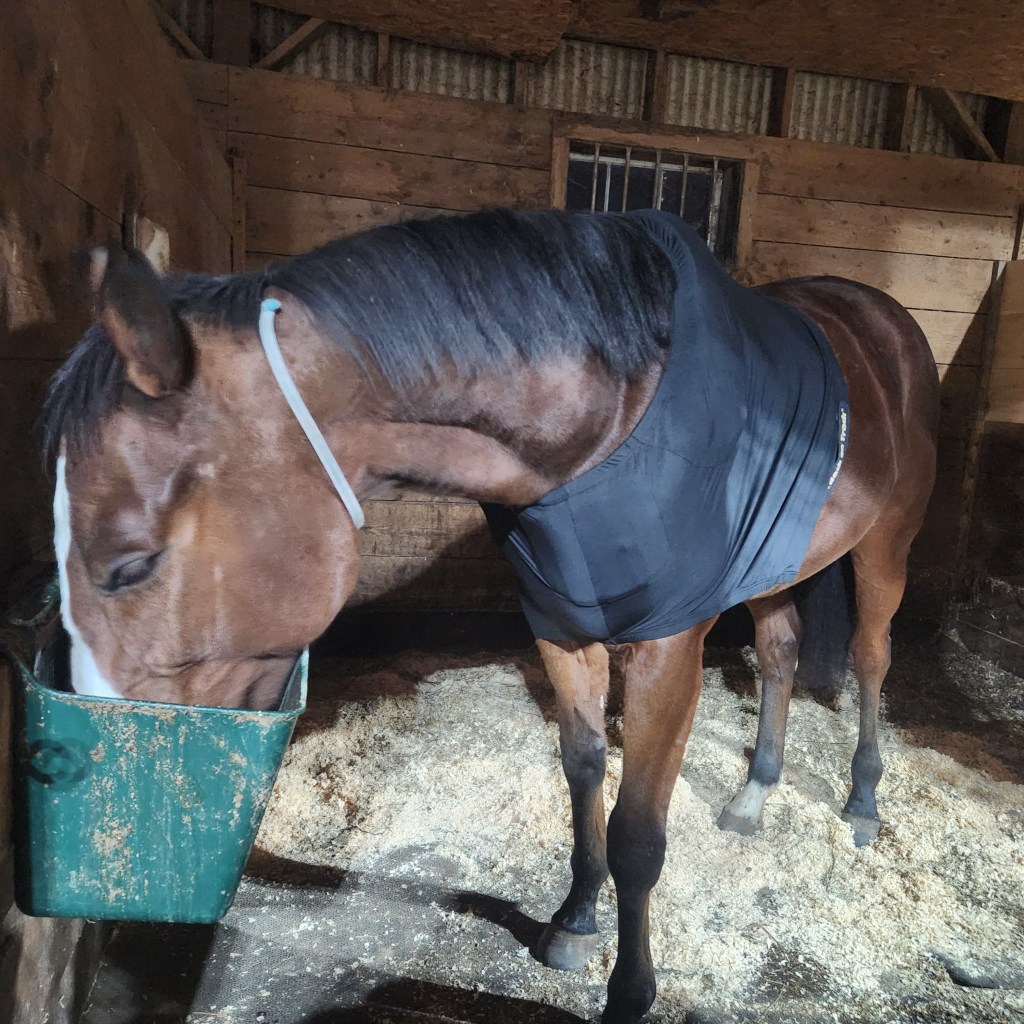
LIMIT NSAIDS
WHY: Bute, Banamine, Equioxx and other non-steroidal anti-inflammatory drugs. These drugs damage the protective lining of the gut while increasing the acid produced. If your horse needs some painkillers try to limit how long you have him on the drugs and consider changing his diet to prevent ulceration.
LIMIT HUMAN INTERACTION
WHY: It’s been noted that sometimes we are a bit too much for horses. Make your interactions with your horse good ones, and try to limit how many hours you’re taking them away from their friends and routine each day.

SUPPORT YOUR HORSE DURING TIMES OF STRESS
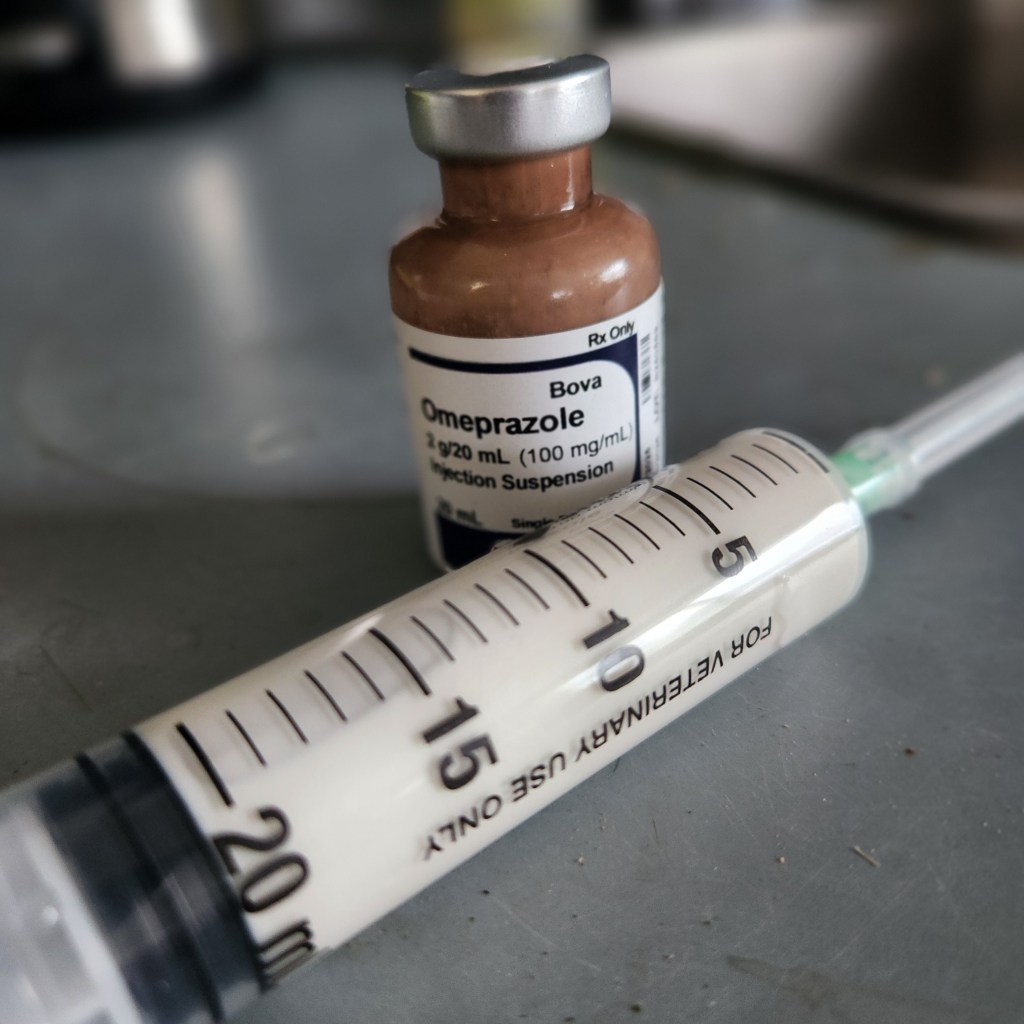
WHY: Stress is a major component in horses developing ulcers. If your horse is particularly prone, talk to your vet about giving him omeprazole during these times. I personally give Stanley omeprazole 2 days before travel, during travel, and again a day or two after the travel.
GIVE YOUR HORSE 2 DAYS OFF AFTER TREATMENT
WHY: If and when you need to treat your horse for ulcers your vet will typically prescribe a 28-30 day treatment. Once you finish your treatment and stop giving omeprazole, your horse will experience a rebound of stomach acid in the following days. Give your horse one or two days off with as little stress as possible to help him recalibrate.
ARGUMENTS: “My horse needs to go back to work and I can’t afford to give him 2 days off.” Acid production returns at almost double the rate after coming off omeprazole. This rebound has been observed and documented. Extra stress won’t guarantee the ulcers return but with all that acid buildup you aren’t doing your horse any favors. Can you afford to go through that treatment all over again?
LISTEN TO YOUR HORSE
Learn to look for queues of discomfort from your horse. Signs might be subtle so always check in with him. Look for increased irritability, increased flightiness, stress behaviors (cribbing, wood chewing, weaving), how is he eating? Look at his eyes, nose, and mouth and look for pain signals. For Stanley he begins to get aggressive with his mealtimes, eats less of his meals, eats less hay, and begins to eat trees.
Look at your routine. Are you training or drilling? Are you making time for your horse to have fun and relaxation? For Stanley, he enjoys it when I get him out of the arena and take him for a field ride from time to time.

Additionally, each horse will thrive under different conditions. My horse Tiger in fact was much less happy when he lived out 24/7 despite having pastures, unlimited hay, and unlimited turnout. He’s actually much happier having less turnout and returning to his own stall each day.

I am flabbergasted that show barns still exist that do not turn out, feed starchy concentrates, feed limited hay to each horse regardless of their needs, and still expect the moon and stars from their horses. They are still out there despite all of the scientific data to prove why horses should be managed differently. Then again there are hard headed stubborn senior horse-people (not all of them of course) out there who refuse to acknowledge that after 50 years in the industry they can still learn.
If you’ve found yourself boarding at a farm you may be limited on what you’re able to change for your horse. Talk to the farm manager and implement the changed you can without causing too much friction. If these changes you want to make are not welcomed by your farm, you might need to consider where your priorities lie and compromise. You might decide to move your horse to a new farm. This is a decision completely up to you.
Sometimes the exact right conditions cannot be entirely implemented. That’s okay. We are charged with doing what we can for our horses. But please do make the changes that you can make.

There are other feed items and supplements that you can provide that can benefit and help the horse’s GI system. This current list is mainly focused on the actual horse management. Let’s dive into gut healthy foods and snacks in another post!

 The Green Horseman
Leave a comment