

A few years ago my attention was brought to a fast-growing discipline in this country called working equitation. A local trainer had me build a gate and a bridge for her. I loved the idea and had a blast building the items. Since then Working Equitation has been on my radar, and I’ve wanted to try it, but life has had other plans.
With Stanley, I am enjoying finding ways to keep him happy and engaged. He gets ring sour when we ride dressage too often. In the summer we take our field rides (Suceeding With Stanley) and he finds it the most thrilling…he’s relaxed and listens well.

If you caught up with me a few weeks ago I shared with you a lofty list of things I’d like to do in 2025 (if life allows us)…see Looking Forward into One Year Ahead. Working equitation is on that list. I think Stanley would have a lot of fun with it. I really love the idea of the multi-phase show with dressage being the first element. The tests are different from USDF (you have rein back and teardrops in the level 1 walk/trot tests). I’ve grown to love dressage and having Western, English, Eventing, and Working Equitation tests to choose from is incredible.
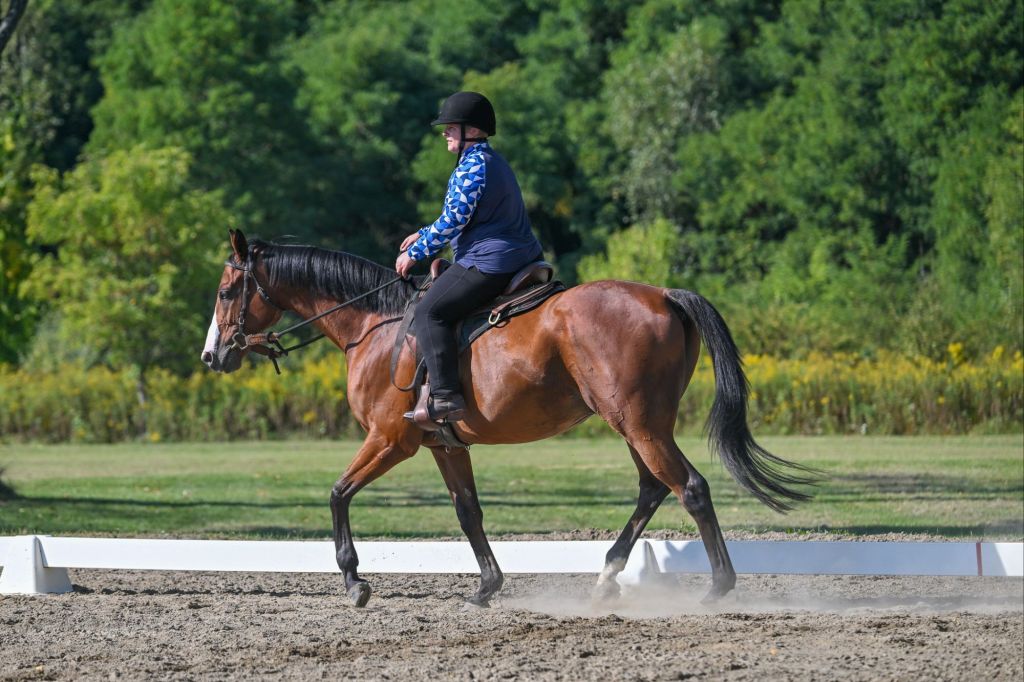

In working equitation, your first phase is a dressage test. The second phase is the ease of handling…essentially trail/versatility type obstacles. That’s it for level 1. Once you move to level 2 and above you add the speed trial (obstacles for time) and an optional cattle trial.
I decided winter would be an excellent opportunity to gain some exposure to the types of obstacles we will see in working equitation. As long as I can I am/will be running working equitation nights at our farm. I set up 3-4 obstacles in the indoor and anyone can come play. They can simply bring their horses in hand or ride them through the obstacles. Winter riding can be a chore sometimes so this helps keep it interesting!
On December 30th I set up several options.
Switch Cup: The posts are placed 4 feet apart with a cup placed upside down on one. We ride and halt in the middle of the posts, and with one hand lift the cup off one post and place it on the other. The horse is to remain still the entire time.


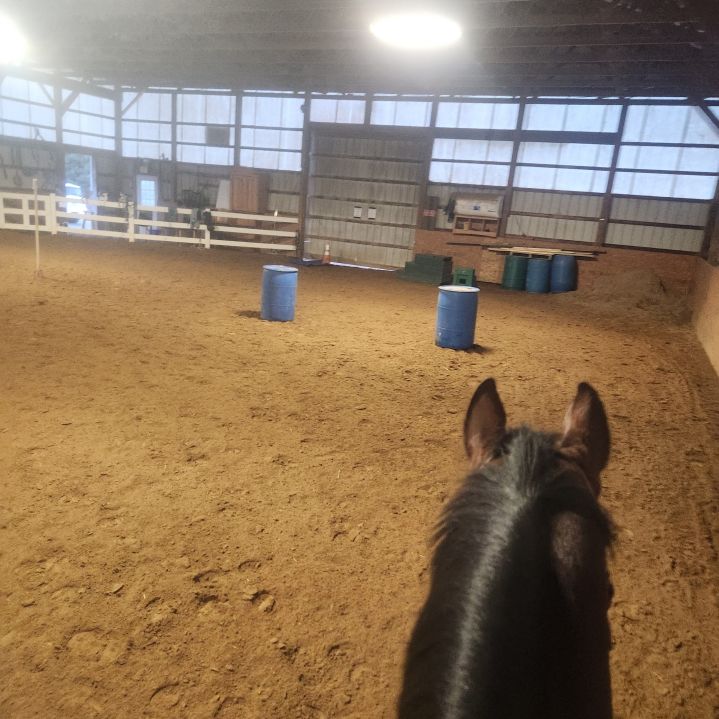
Figure 8: 2 Barrels are placed 10 feet apart at the center. You ride through the center, around 1, back through the center and around the other. The aim is to maintain accurate circles around each barrel.
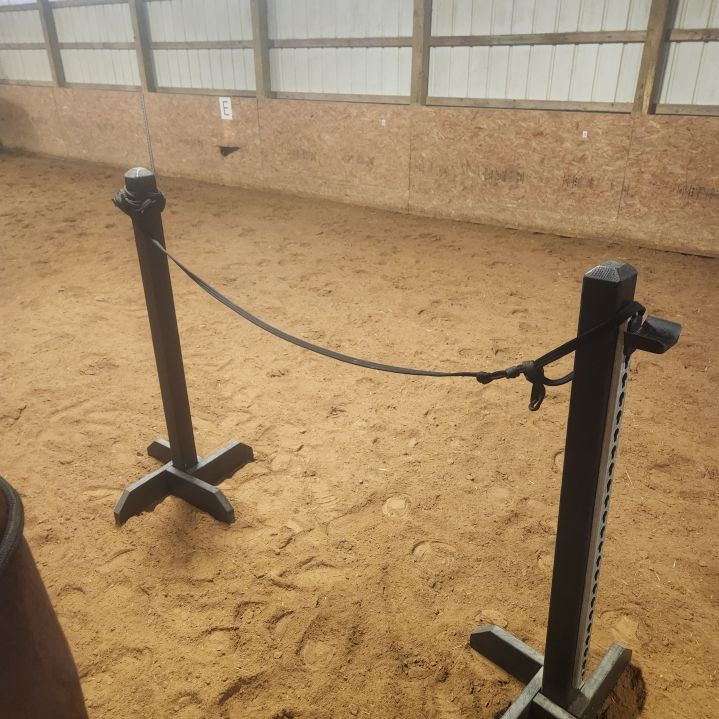
Gate: I placed a rope around jump standards placed 6.5′ apart. You approach the gate and lift the rope off one standard, go through, then back and place the rope back over the standard, without releasing the rope.
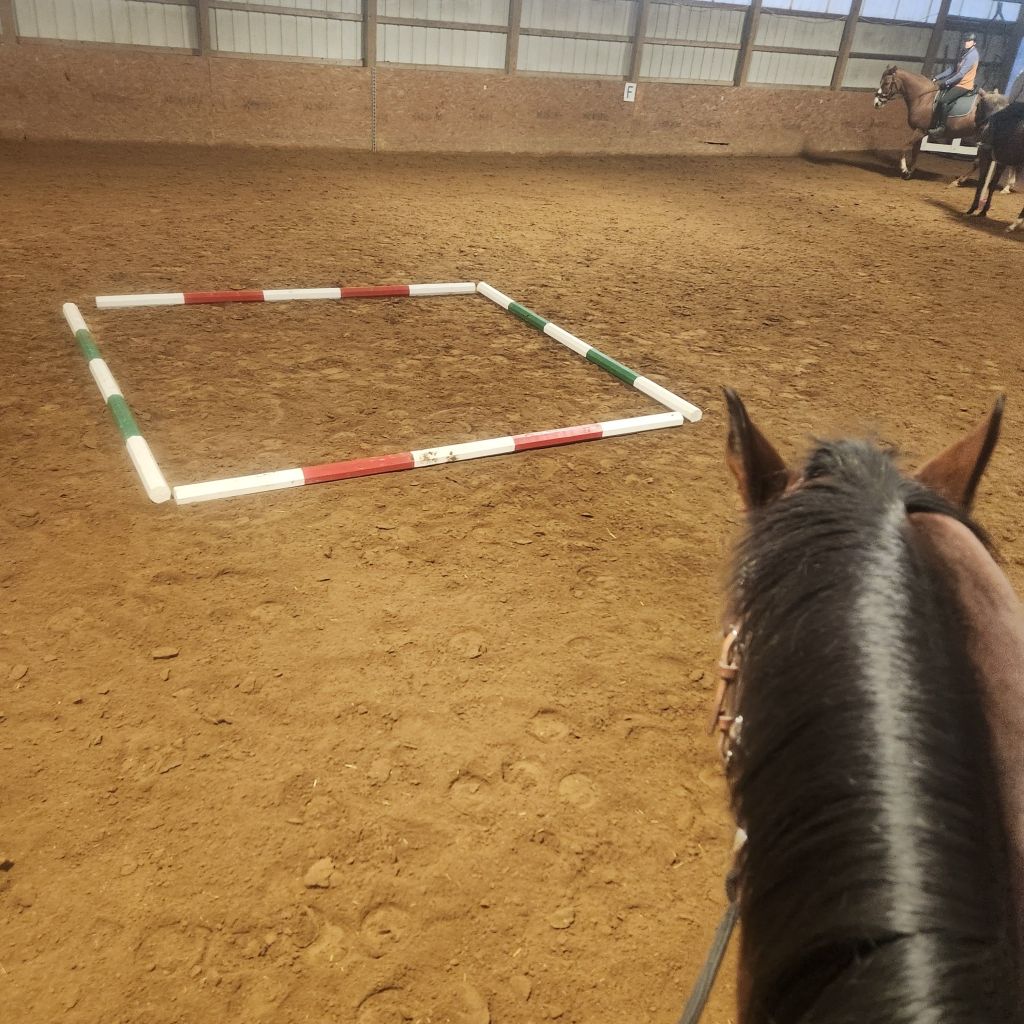
Not Working Equitation, but I also laid a square out of 10ft poles and a corner question. The corner was placed in a notoriously spooky corner. The poles distract the horses from the spooky corner and force them to focus on their footwork. It worked incredibly well! The square is so versatile you can practice nearly anything with it (maybe a great article for the future?)! We also grabbed a tarp and laid it down. Stanley didn’t blink at it, I feel so lucky that he’s brave and confident.
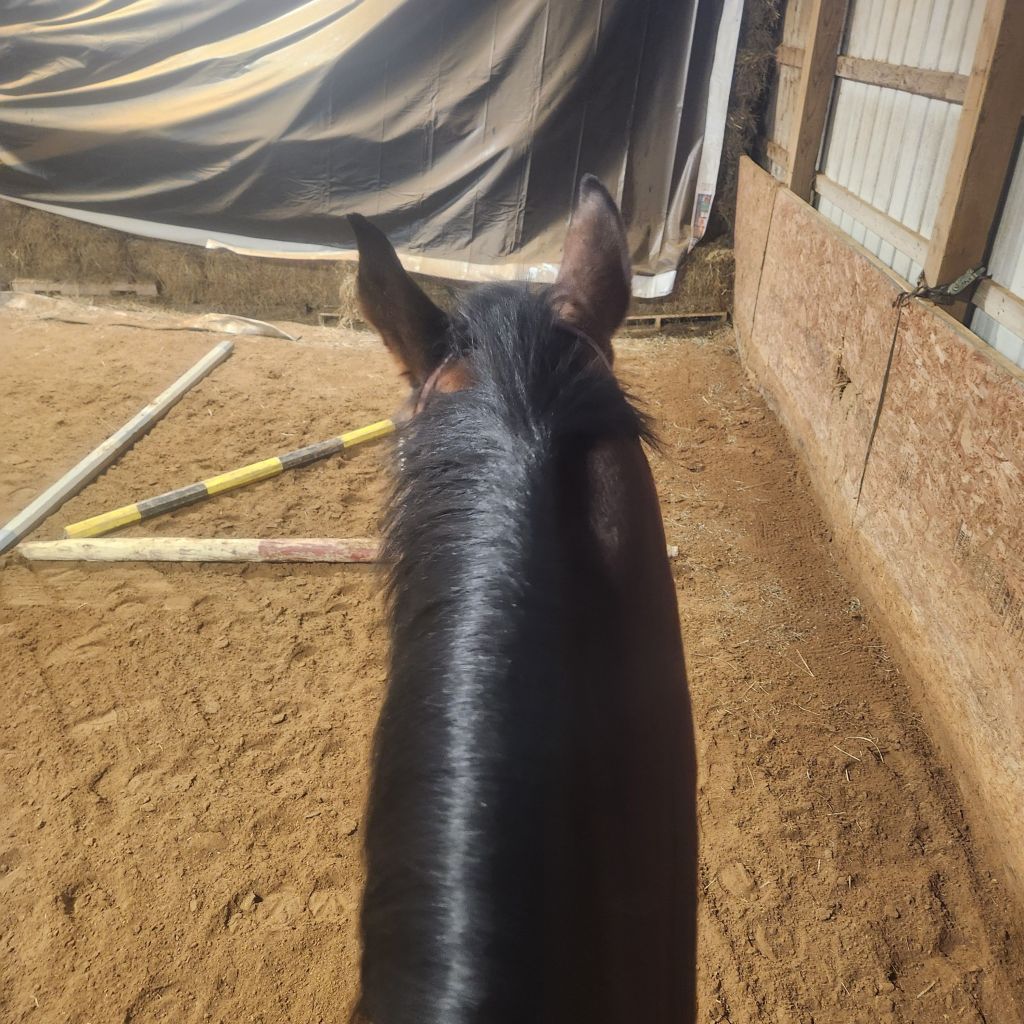
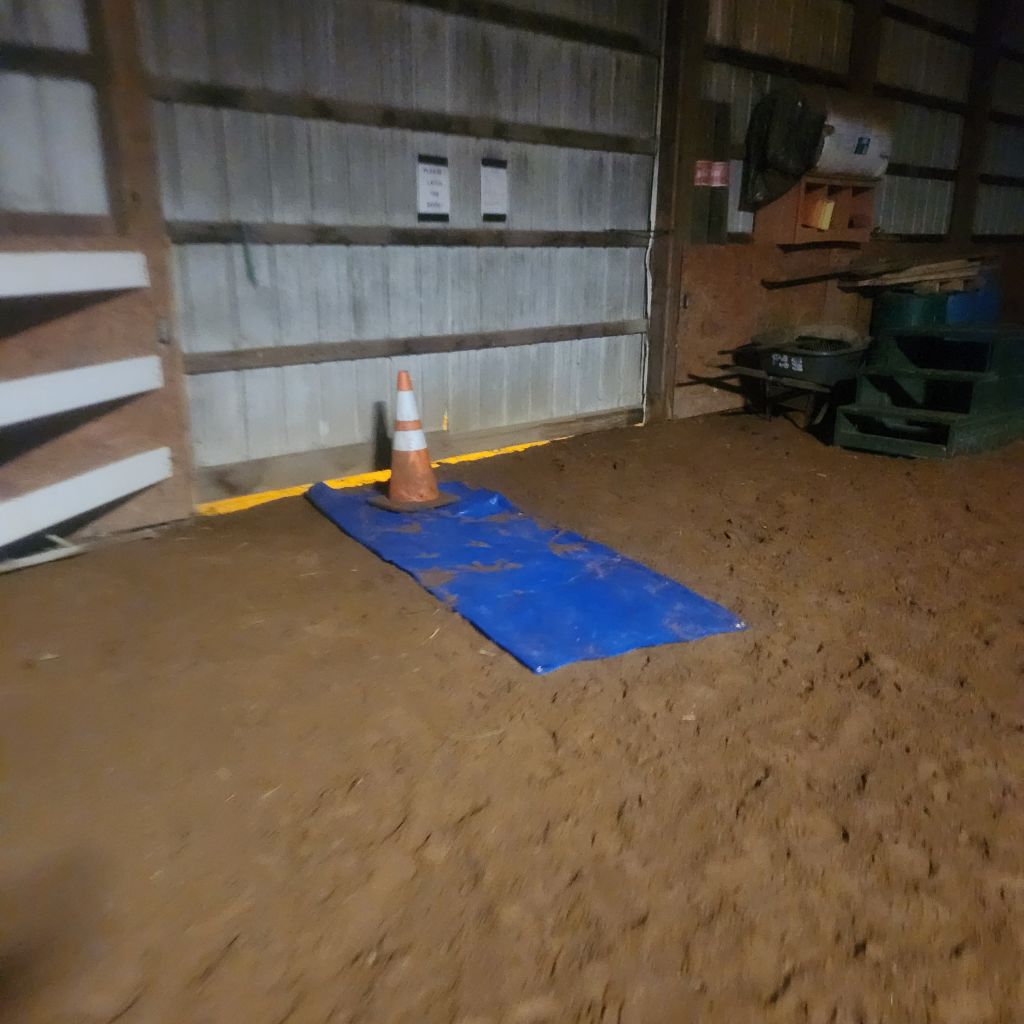
That day was a great success so two weeks later we set up a few more obstacles.
On January 13th we did:
Pen: I got a dog playpen and found some cheap bounce toys on Facebook Marketplace. The inner pen is 10ft diameter. Then I used cavaletti and poles to set up a corridor around that pen with an 8ft opening and 5ft space all the way around. The aim is to enter the pen straight then proceed around the pen. Should be ridden in both directions.


Jug: This obstacle is supposed to have a jug with a handle and a taller pedestal but I used what I got. The aim here is to halt and lift the jug up and place it back down without the horse’s legs moving.
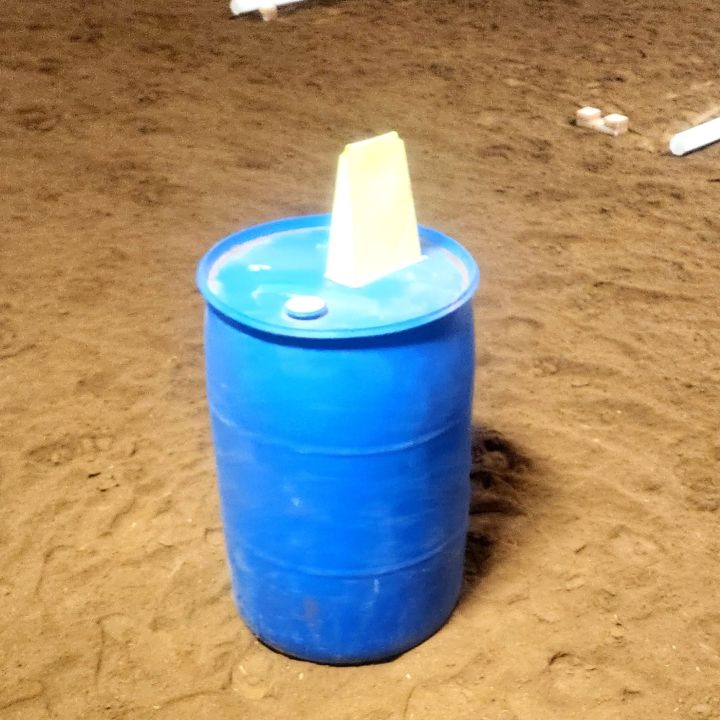
Sidepass Rails: These are simply 10ft poles placed on risers. I placed them at a canter pole distance for versatility in a small arena. You can practice side passing these rails in either direction. Level 1 of working equitation doesn’t call for this obstacle but it’s excellent practice.

In addition I also set the corner fan back up by popular demand.

Stanley has been doing very well with these days despite a few obstacles (pun intended). We removed hind shoes in December for the winter and this month we removed his fronts. We like to give them a few cycles in winter to regrow the nail holes and let their hooves feel the Earth for a bit. The last few years we’ve been spoiled with mild winters but this year the ground is frozen so Stanley’s first few days without shoes were rough. He was quite footsore, so I began a regimen with hoof hardener. Unfortunately, during a very cold spell and 24 hours after shoe removal he must not have moved around much. I was present all day as he got chiropractic care and acupuncture. Two hours later he came in for dinner and appeared colicky. Fast forward 4 hours later with Banamine, Equispaz, a few calls with the vet, a few miles of walking in the indoor and we finally had 2 poops and a stable horse. A week later his feet are feeling better enough for me to get on him.
Stanley is a funny guy. He approaches everything as if he’s always known it. We were able to do the gate 5 times in the beginning but mid-ride he developed an inability to approach and stand still to it. We slowed it down and did it in smaller pieces so he was certain he was doing exactly everything I asked correctly.
The side pass rails were similar. He side passes to the left very well but struggles to the right. I decided to get down and teach it to him on the ground first. A few excellent runs on the ground later he did it well under saddle. I stopped to talk to a friend for a little while and when we went back to work he “forgot” how to do it. We had some discussions about it and I decided to finish on a good note by dismounting and asking side pass from the ground.
Stanley obviously has the desire to learn and a great amount of bravery. He’s willing but sensitive. He also has opinions and communicates them. I try to listen and honor some of his input while getting through his “baby” moments. There are many ways I can interpret his behaviors and I’m sure a professional would be more effective, but I’m really pleased with our progress.
I’m looking forward to setting more obstacles up in the future, it’s a fun way to engage the horses through the winter months when we can’t get out of the arena.
I do my best to set up an obstacle to get the horse to stand (Jug,Switch Cup), an obstacle to work on lateral movements (sidepass rail, gate), and an obstacle to bend through the ribcage (figure 8, pen). We still have several other working equitation obstacles to play with so stay tuned!


 The Green Horseman
Leave a comment